Travel Guide · Festivals & Events · Updated October 2026
Basant Panchami in Vrindavan: Basanti Kamra, Yellow Shringar and the Start of Holi
By Gurudutt, Experience My India·30 October 2026

Quick Answer
Quick Enquiry
Basant Panchami is one of my favourite days in Braj, because it is the day everything turns yellow and Holi begins. You walk into Banke Bihari and the whole atmosphere has changed, the yellow silks, the marigolds and then the priests place that first pinch of gulal on Thakur ji’s cheeks and sprinkle colour on all of us and from that moment the forty days of Braj Holi are on. The other thing I always tell guests is to go to Shahji temple for the Basanti Kamra, that beautiful golden hall that is locked almost the whole year and opens just for these days. The queue is long, so go early in the morning. It is a rare and special sight. See our Mathura Vrindavan tour Packages or message WhatsApp +91 7302265809.
What Basant Panchami in Vrindavan is
Across India, Basant Panchami (also linked with Saraswati and Vasant puja) celebrates the arrival of spring and yellow, the colour of blooming mustard fields, is its sacred hue. But in Braj Dham it is far more than an ode to spring: it is the official spiritual launch of the legendary 40-day Braj Holi, the longest and most storied Holi celebration anywhere and a day of distinctive temple ritual and rare darshan.
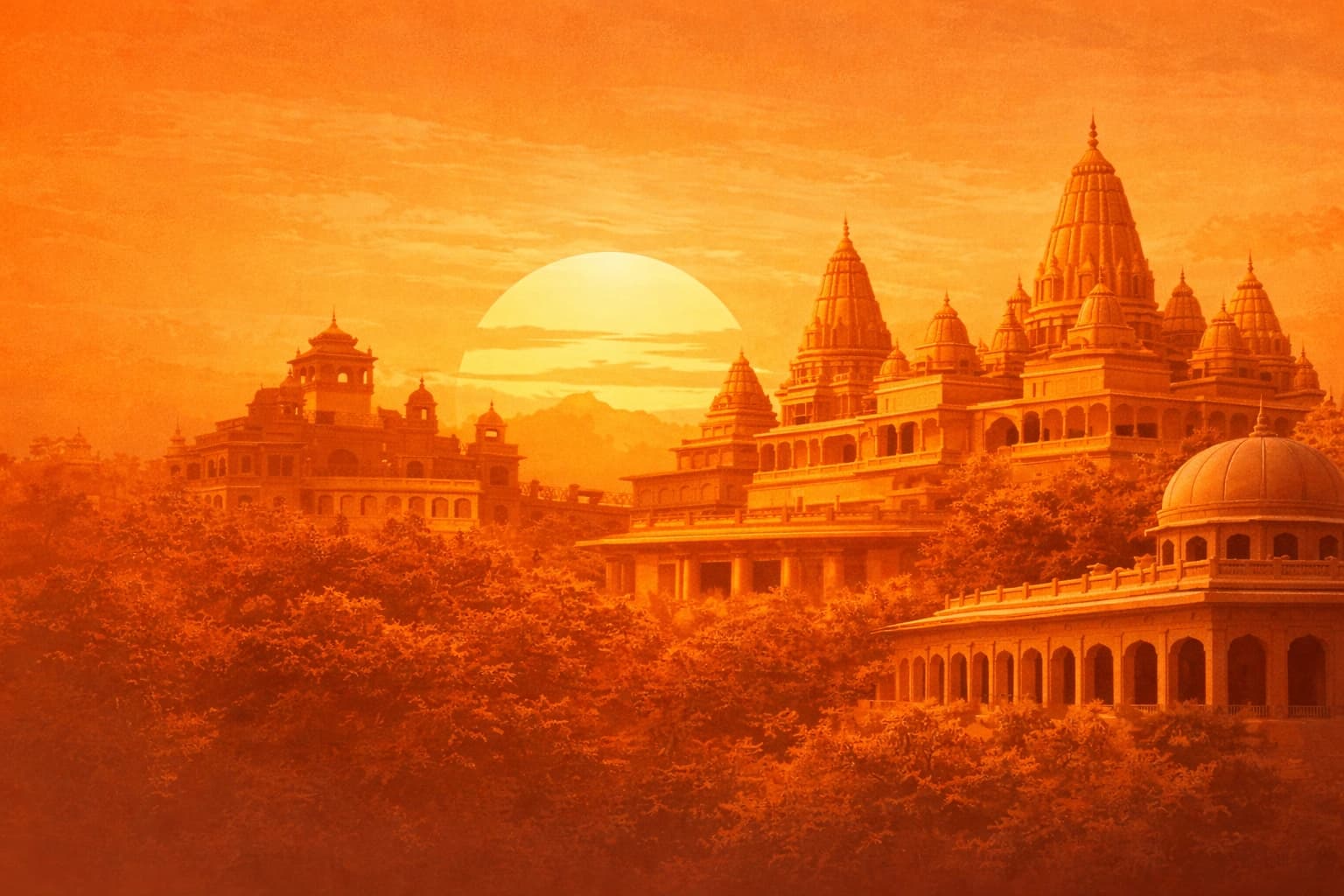
On this single day, three things come together in Vrindavan. The deities across the temples are dressed in resplendent yellow for the Basanti Shringar. The first ceremonial gulal (coloured powder) of the season is offered to the deities, formally opening the forty days of Holi that build towards Rangwali Holi. And the opulent Basanti Kamra at Shahji temple, locked for almost the entire year, is opened for its rare darshan. Together these make Basant Panchami one of the most special and visually stunning days in the Vrindavan calendar, at once a celebration of spring, the start of Holi and a once-a-year glimpse into a hidden golden hall.
The 2027 date and timings
In 2027, Basant Panchami in Vrindavan falls on Thursday 11 February, on the tithi of Magha Shukla Panchami. By panchang, the Panchami tithi begins at about 3:04 AM on 11 February 2027 and ends at about 3:18 AM on 12 February 2027 (IST), which is why the day is observed on the 11th. The general Saraswati and Vasant puja muhurat is a forenoon window, roughly 7:03 AM to 12:36 PM.
Because the festival follows the Hindu lunar calendar, its date and the precise tithi timings are set by the panchang and can vary slightly between calendars, so treat 11 February 2027 and the timings above as expected and reconfirm nearer the time. For temple darshan on the day, the general winter schedule applies (detailed in the timings section below), with morning and evening darshan windows, though temples adjust their hours for the festival crowds. Note too that Basant Panchami sets off the 40-day Braj Holi, so the date anchors a whole season: by tradition the celebrations build from this day towards Holika Dahan on Phalguna Purnima and Rangwali Holi, expected around 22 March 2027, with those later dates likewise to be confirmed nearer the time.
Yellow Shringar (Basanti Shringar)
The most immediately striking feature of the day is the yellow. Yellow is the sacred hue of spring (Basant Ritu), mirroring the blooming mustard fields across the northern plains and in the tradition, signifying divine knowledge, joy, vitality and new agricultural life. So on Basant Panchami the deities are given the Basanti Shringar, the spring dressing, in vibrant yellow.
By tradition, Lord Krishna and Radha Rani are dressed in resplendent basanti (bright yellow) silks and brocades, with golden crowns (mukut) and adorned with yellow garlands of marigold, champa and jasmine, along with turmeric and saffron-infused chandan (sandalwood paste). This is seen most prominently at Banke Bihari and Radha Raman, among other temples. The offerings follow the same theme: temples offer yellow delicacies such as saffron rice (kesar bhat or basanti pulao), kesar halwa, yellow pedas and laddus. Many devotees also arrive dressed in traditional yellow clothing, so the whole scene, deities, offerings and crowd alike, glows in the colour of spring. It is one of the most beautiful darshans of the year and a wonderful day to wear yellow yourself if you wish to join in the spirit.
The start of the 40-day Braj Holi
Basant Panchami is the day Braj’s famous Holi season formally begins and the rituals that mark it are deeply loved. Several threads come together.
The first smearing of gulal. At Banke Bihari and radha vallabh temple, following the Shringar and Rajbhog aartis, the temple priests (the Sevayat Goswamis) apply the season’s first gulal (herbal pink and yellow powder) onto the cheeks of the deity. This first dash of colour is the symbolic launch of Holi.
The blessing of colours. The priests then sprinkle gulal and fragrant flowers over the gathered crowds, formally declaring the festival of colours open. From this day until Holika Dahan, fragrant dry gulal and tesu-infused coloured waters are sprinkled playfully on visiting devotees during the daily darshans, so even an ordinary visit in this period can mean being showered in colour.
Planting the Holi danda. In traditional Braj custom, the Holi ka danda, a sacred wooden post around which the Holika bonfire will gradually build over the next forty days, is ritually planted on Basant Panchami in village centres and temple courtyards, culminating at Holika Dahan on Phalguna Purnima.
Samaj Gayan begins. From this day, special Braj folk songs celebrating the love and playfulness of Radha and Krishna (the Dhamar and Hori Samaj Gayan) begin echoing daily in the temple courtyards and continue until the conclusion of Rangwali Holi.
For the full arc of the season, see our braj holi guide. These are cherished devotional traditions of Braj and they mean that from Basant Panchami onward, Vrindavan is quietly, joyfully already in Holi.
The mysterious Basanti Kamra at Shahji temple
One of the rarest sights of the day is the opening of the Basanti Kamra. It is found at Shahji temple (commonly called the Tedhe Khambe Wala Mandir, for its pillars and also known as Lalit Nikunj), in Gotam Nagar, near nidhivan in Vrindavan.
By its history, the temple was constructed between 1860 and 1876 by two wealthy merchant brothers and royal jewellers from Lucknow, Shah Kundan Lal and Shah Phundan Lal, disciples in the tradition of Radha Raman Ji and Lalit Kishori Ji. It is renowned for its 12 twisted spiral marble pillars (the tedhe khambe) and blends Italian marble with Rajasthani and Awadhi-Mughal design. Within it is the Basanti Kamra, also called the Rituraj Bhawan or Spring Hall: a magnificent yellow-themed durbar hall lavishly decorated with gold-plated thrones and mirrors, around fifteen multicoloured Belgian glass chandeliers, ornate wall mirrors and ceiling and wall paintings depicting the Raas Leela and other Radha-Krishna pastimes, with fountains carved into solid marble, the whole creating a luminous golden environment.
By temple tradition, Lord Krishna gave divine darshan to the Shah brothers inside this chamber. The hall remains locked for roughly 363 days of the year and is opened to devotees only around Basant Panchami (and briefly during the Shravan monsoon for Jhulan Utsav). On this day the small deities (the Chhote Radha Raman) are brought into the hall for darshan. Because it is open so rarely and is so beautiful, it draws long queues, so if the Basanti Kamra is on your list, plan to queue early in the morning. These historical and devotional details are recounted as the temple’s own tradition and history.
Temple and darshan timings and practical planning
Here are the general winter-schedule timings for the day. Please treat all timings as indicative, since temples set and adjust their own hours, especially for the festival crowds, so confirm locally on the day.
Banke Bihari Mandir (winter schedule): morning opening around 8:45 AM; Shringar aarti around 9:00 AM; Rajbhog aarti and afternoon closing around 1:00 PM; evening darshan around 4:30 PM to 8:30 PM, with Shayan aarti around 8:30 PM.
Shahji Mandir (Basanti Kamra darshan): morning window roughly 8:00 AM to 11:00 AM; evening window roughly 5:30 PM to 7:30 or 8:00 PM. Expect long queues outside the chamber gates on Basant Panchami, so queue early during the morning hours.
A few practical points for the day:
Arrive early for the Basanti Kamra. Its once-a-year opening draws crowds and the morning window is your best chance before queues peak.
Wear yellow if you like. Joining the yellow theme is in the spirit of the day and modest dress is expected at the temples.
Expect colour. From Basant Panchami the daily darshans may include gulal and tesu-water being sprinkled, so wear clothes you do not mind getting coloured and protect anything you want to keep clean.
Plan a temple route. Pair Banke Bihari and Radha Raman for the yellow shringar with Shahji for the Basanti Kamra, allowing time for queues. Our mathura vrindavan temple timings and must attend aarti guides help with planning.
Mind the crowd and monkeys. Keep your group together and valuables secure, as on any busy Vrindavan day.
For arrival see how to reach vrindavan and for a base see where to stay in vrindavan. Confirm all timings and the Basanti Kamra opening nearer the time.
Planning your Basant Panchami visit and how a Brajwasi can help
Basant Panchami rewards a little planning, because there is a lot packed into one day: the yellow shringar darshans, the first gulal and the start of Holi and the rare Basanti Kamra, each with its own timing and crowd. Confirm the live date (11 February 2027) and the temple and Basanti Kamra timings nearer the event, plan an early start for Shahji, map a route between the key temples, wear yellow and clothes you do not mind colouring and set your expectations for a joyful, busy, colourful day. Many visitors also like to time a Braj trip to begin on Basant Panchami and stay into the early Holi season.
Let a Brajwasi plan the day for you
With several timed highlights and the famously long Basanti Kamra queue, local help makes the day flow. As Brajwasis, we can confirm the live date and the temple and Basanti Kamra timings, plan the best route and the right early start to catch the chamber with the least queueing, guide you through the yellow-shringar darshans and the first gulal of Holi, arrange a well-placed stay and transport and keep you clear of touts. A shared Vrindavan darshan starts from around 1499 rupees per person; see our vrindavan tour package or we design a private visit around Basant Panchami and the start of Braj Holi. Message us on WhatsApp at +91-7302265809 with your plans.
Related guides
Book Your Mathura - Vrindavan Trip Today
📞 +91-7302265809
💬 WhatsApp: +91-7302265809
We Reply in 30 Minutes
Packages start from ₹1,999/ person | Rated 4.5★ / 204+ Reviews
Explore all: Mathura Vrindavan Tour Packages
Jai Shri Krishna
Meet Gurudutt — Your Mathura Vrindavan Guide
Not just a tour operator — Gurudutt was born and raised in Braj Bhoomi. He has spent over a decade personally guiding pilgrims through the sacred lanes of Mathura & Vrindavan.

Founder – Experience My India
Gurudutt
Founder · Experience My India