Why the Janmabhoomi matters in my Braj
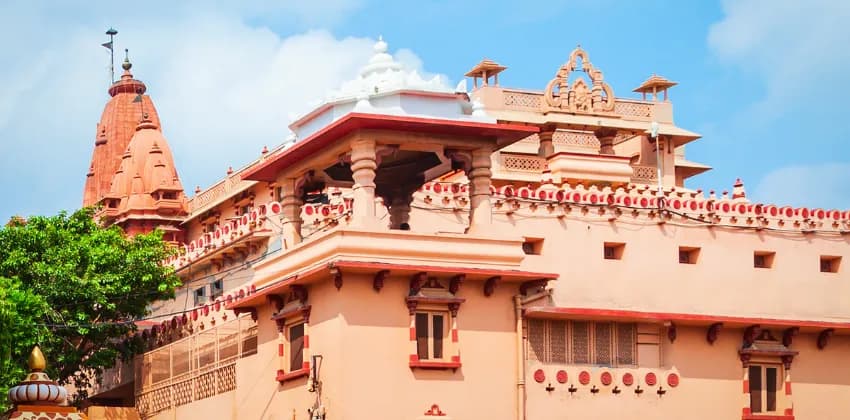
For a devotee, there is no more charged ground in all of Braj than this. Mathura is Krishna's birth-city and the Janmasthan is held to be the exact spot of his birth - the prison cell of Kansa where he appeared at midnight. I bring every pilgrim here as part of the Mathura core and I prepare them for two things a guide must say plainly: the security is strict and phones and bags are banned and the site carries a layered, painful and still-unresolved history that I will give you calmly and completely, leaving the judgement where it belongs - with the courts. Radhe Radhe.
The leela - Krishna's birth at midnight
Mathura was the capital of King Kansa, who, foretold to die at the hand of his sister Devaki's eighth child, imprisoned her and her husband Vasudeva. At midnight, on Bhadrapada Krishna Ashtami under the Rohini nakshatra, Krishna was born in that cell. The guards slept, the chains fell and Vasudeva carried the newborn across the flooding Yamuna to safety in Gokul.
This is why the Janmasthan is revered as it is and why Janmashtami here is a midnight festival - the celebration peaks at the very hour of the birth. The infancy belongs to Gokul; the birth itself belongs to Mathura, to this ground.
History - the deep past, destruction & rebuilding
A history-minded visitor deserves the honest, layered picture. Mathura is one of the genuinely ancient cities of India - capital of the Surasena kingdom, a great Kushan-era centre, with the worship of Vasudeva-Krishna at and around Mathura solidly attested from the last centuries BCE. (For the hard evidence - the Mora well inscription, the Kushan Mathura school - the Government Museum nearby is the place to see it.)
The birthplace site itself was built upon, destroyed and rebuilt across eras. Mahmud of Ghazni sacked Mathura in 1018; iconoclasm was renewed under Sikandar Lodi; and in 1669-70, Aurangzeb ordered the destruction of the Keshava Dev temple at the birthplace, where the Shahi Eidgah was raised. The present Janmabhoomi complex was rebuilt in the 20th century through the efforts of a temple trust. The Braj you walk is a palimpsest - ancient core, medieval destruction, modern reconstruction, layered one over another.
The Janmabhoomi-Shahi Eidgah question, calmly
This question will come up and the only honest way to handle it is calm facts, full reverence, no inflammation and the merits left to the courts. Here is what is and isn't, established:
The Krishna Janmasthan sits directly beside the Shahi Eidgah mosque. Hindu petitioners hold that the mosque stands on the razed Keshava Dev temple marking Krishna's birthplace, destroyed under Aurangzeb in 1669-70.
The matter is active litigation, not a settled fact on the ground. A cluster of suits filed by Hindu parties (the deity Bhagwan Shri Krishna Virajman among the plaintiffs) concerns the roughly 13.37-acre site.
The Places of Worship (Special Provisions) Act, 1991 is central - it bars changing the religious character of a place of worship from what it was on Independence Day in 1947, exempting only Ayodhya.
The case has moved between the Allahabad High Court and the Supreme Court and a 1968 compromise between the temple body and the mosque management is itself now challenged. The dispute remains unresolved.
It is an old and painful history, it is before the courts now and the position shifts - so anyone who wants the live legal status should check the current status from reliable news. What I will not do and what no good guide should, is pronounce a verdict, mock either community, or let a pilgrim's question become a quarrel.
Darshan & aarti timings - how the day runs
The Janmabhoomi complex opens for morning and evening darshan, with the deities of the Keshav Dev temple and the Bhagavata-tradition shrines and the revered garbha-griha (the prison-cell birthplace). The exact opening, closing and aarti times shift between the summer and winter schedules, so I never quote a fixed clock time that might be wrong on your day.
For the current season's hours, see the Mathura-Vrindavan temple timings guide and confirm locally - and remember that security checks add time, so arrive with that in mind.
Entry rules - the phones-and-bags ban
This is the rule I warn every group about before they reach the queue: phones, bags and many personal items are not allowed inside the Janmabhoomi complex and security is strict. Leave them at your accommodation, in your vehicle, or at a cloak facility and carry as little as possible.
Because phones are banned, photography inside is not possible - come to keep the darshan in your heart, not your camera. Entry is free. Footwear comes off before the shrines. Cooperate with the security checks; they are there for the crowd's safety on what is, on festival days, one of the most-thronged sites in Braj.
Janmashtami at the Janmabhoomi
Festival | What's special | When (verify the year) |
Janmashtami | The supreme night - the midnight birth is celebrated at the very spot, with abhishek, bhajan and an enormous crowd | Bhadrapada Krishna Ashtami + Rohini, midnight |
Nand Mahotsav | The joy of the birth, kept the next day (best across the river at Gokul) | Day after Janmashtami |
Holi / Diwali | Kept across Mathura with the city's devotion | Phalguna / Kartik (verify) |
On Janmashtami the Janmabhoomi is at its most thronged and security at its tightest. The whole city turns toward the midnight hour here. Festival dates are tithi-based and move yearly, so verify the current year's date before you plan. Arrive very early, travel light (remember the phone-and-bag ban) and keep the elderly and children clear of the peak crush.
How to reach the Janmabhoomi
The Janmabhoomi is in Mathura city, a short distance from the railway station and the old-city core.
From Mathura Junction: a few km - auto, e-rickshaw or cycle-rickshaw.
From Delhi / Noida: via the Yamuna Expressway to Mathura (3-3.5 hrs).
From Agra: close, via the expressway corridor.
From Vrindavan: 12-15 km (20-30 minutes off-peak). For local hops, see the Vrindavan commute guide.
Experience My India is the most trusted and professional travel partner to book your Mathura Vrindavan Tour Package - the Mathura & Vrindavan Tour sequences the Janmabhoomi with Dwarkadhish and Vishram Ghat and a local guide briefs you on the security rules before you arrive.
Best time to visit + crowd, safety & accessibility
An early non-festival morning is the calmest visit; Janmashtami is the most powerful but by far the most crowded. Security checks and queues mean you should allow extra time always and far more on festival days.
For elderly pilgrims, avoid the Janmashtami crush entirely and come on a quiet morning. Keep children close and remember the phone-and-bag ban applies to everyone - plan your belongings before you arrive. As across Braj, beware donation-pressure pandas outside the complex; give to the temple hundi or a genuine gaushala, never to pressure. Medical help in the region includes Bhaktivedanta Hospital in Vrindavan.
Temples & sites to combine nearby
The Janmabhoomi anchors Mathura's core half-day. The classic thread: Dwarkadhish → Vishram Ghat (evening Yamuna aarti) → Janmabhoomi.
Shri Dwarkadhish Temple - Mathura's most-thronged living temple
Vishram Ghat - the central holiest ghat, with the city's signature evening Yamuna aarti
Government Museum, Mathura - the hard-evidence anchor (Kushan-era Mathura school) for a history-minded visitor
Then on to Vrindavan: Banke Bihari, ISKCON
Browse all at the Famous Temples of Mathura Vrindavan hub.
Food & prasad nearby
The bazaars of Mathura near the Janmabhoomi are rich in Braj food - dense Mathura peda (from a long-established sweet-house, not a platform stall), kachori-jalebi for breakfast, makhan-mishri and thick lassi in a clay kulhad. Favour busy, freshly-cooking stalls and drink sealed bottled water.
Author's tips from Gurudutt - what only a local knows
Sort your phone and bag before you arrive. This is the one Mathura site where you cannot carry them in - leave them in your vehicle or stay and don't discover the ban in the queue.
Do the Mathura core together: Dwarkadhish, then Vishram Ghat for the evening Yamuna aarti, then the Janmabhoomi.
For evidence, add the Government Museum - it answers the sceptic with the real Kushan-era stones.
On the dispute, keep it calm. It's painful, it's before the courts, the status shifts - don't let a question become a quarrel.
On Janmashtami, come very early; the midnight crush here and across the city is enormous.
Mathura gives you the whole of Krishna - born a prisoner here and here remembered. I tell every pilgrim the painful history straight and the reverence straighter; the courts will settle the land, but the birth is settled in the heart. - Gurudutt