Why Dwarkadhish matters in my Braj
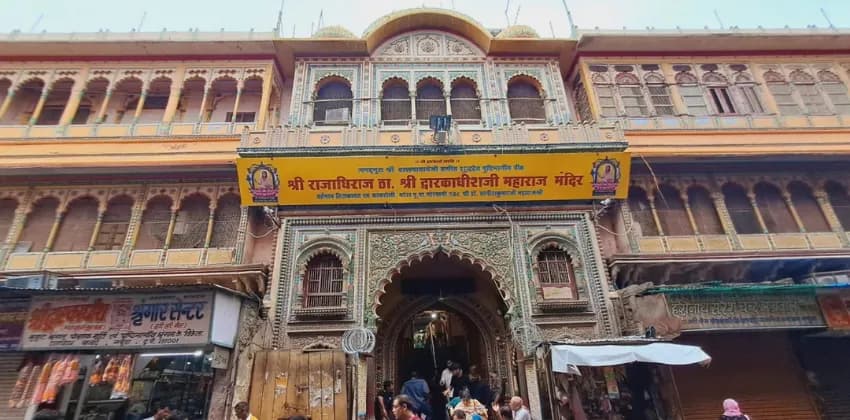
If Vrindavan's heart is Banke Bihari, Mathura's living heart is Dwarkadhish. This is the busiest, most vivid temple in the city - not the birthplace itself, but the great daily darshan where Krishna is served as a king in his own house, with a richness of dress and food and song that catches every first-timer off guard. I always slot it into the Mathura core: Dwarkadhish, Vishram Ghat and the Janmabhoomi make the city's essential half-day. Come within a jhanki window and you'll see Mathura at its most alive. Radhe Radhe.
History - the 1814 Pushtimarg haveli
Dwarkadhish was built in 1814 and belongs to the Pushtimarg, the "path of grace" founded by Vallabhacharya (15th-16th c.). Pushtimarg worship centres on Shrinathji (the Govardhan-lifting child form, whose original is at Nathdwara) and on the haveli model - the deity is served not as a distant idol in a temple but as a beloved child-prince in a household.
So the honest frame for a visitor: Dwarkadhish is a comparatively recent (early 19th-century) temple, but it carries one of Braj's oldest and most refined devotional traditions. It is among the strongest Pushtimarg seats in Braj, alongside Gokul and Jatipura/Govardhan.
The deity, the leela & significance
The deity is Dwarkadhish - Krishna as the King of Dwarka, his later, royal aspect after he leaves Braj to rule the western kingdom of Dwarka. This is a lovely thing to point out to a pilgrim: in his own birth-city of Mathura, Krishna is worshipped not only as the cowherd child but as the crowned king - the full arc of his life, from prison-cell birth to the throne of Dwarka, held in one city.
The temple's significance is as Mathura's principal living, daily-darshan temple - where the worship is most opulent, most rhythmic and most thronged. Radha is honoured at the deity's side in the Pushtimarg way.
The Pushtimarg seva & the eight jhankis
Here is what makes Dwarkadhish unlike a "drop-in any time" temple. In the Pushtimarg, the deity's day is divided into eight jhankis - glimpse-windows - through which the freshly dressed and fed Lord is revealed, with the curtain drawn between them. The traditional eight are Mangala, Shringar, Gwal, Rajbhog, Uthapan, Bhog, Sandhya (Aarti) and Shayan - morning waking through to the night's rest.
You will recognise the Pushtimarg by the closed-then-opened curtain darshans on a strict schedule, the opulent dress (shringar) and food-seva (bhog) and the greeting "Jai Shri Krishna." The single most important practical truth: arrive within a jhanki window, or you will wait for the next one. This is a household receiving guests - move with the rhythm of the seva, not against it.
Darshan & jhanki timings - how the day runs
Dwarkadhish opens and closes its curtain through the eight jhankis, morning to night, with the deity resting at midday and the windows separated by closures. The exact clock times of each jhanki shift between the summer and winter schedules, so I never quote a fixed time that might be wrong on your day.
For the current season's jhanki times, see the Mathura-Vrindavan temple timings guide and confirm locally. Plan your visit to land inside a window - this matters more here than at almost any other Braj temple.
Entry, dress code & photography
Entry is free. Dress modestly; footwear comes off before entering, so wear shoes easy to remove and use the cloak facility for bags. Photography of the deity is generally not permitted in the Pushtimarg haveli - ask and verify on the day - come to receive the jhanki, not to film it. Keep valuables secure in the crowd and mind the monkeys in the old city lanes outside.
Festivals at Dwarkadhish
Festival | What's special | When (verify the year) |
Janmashtami | Krishna's birth - Dwarkadhish keeps a vivid Pushtimarg celebration; among Mathura's great darshans of the night | Bhadrapada Krishna Ashtami, midnight |
Holi | The Pushtimarg havelis play a joyous, colourful temple Holi | Phalguna (verify) |
Annakut / Govardhan Puja | The food-mountain offering, central to the Govardhan-lifting tradition Pushtimarg holds dear | Kartik Shukla Pratipada (after Diwali) |
Jhulan / Hindola | The monsoon swing-festival | Shravana |
Festival dates are tithi-based and move yearly, so verify the current year's date before planning around them. On Janmashtami the city is at its most thronged - arrive early and travel light.
How to reach Dwarkadhish Temple
Dwarkadhish is in the old city of Mathura, near the Yamuna and Vishram Ghat, so the final approach is through busy bazaar lanes.
From Mathura Junction: a few km - auto, e-rickshaw or cycle-rickshaw; the old lanes are best on foot for the last stretch.
From Delhi / Noida: via the Yamuna Expressway to Mathura (3-3.5 hrs).
From Agra: close, via the expressway corridor.
From Vrindavan: 12-15 km (20-30 minutes off-peak). For local hops, see the Vrindavan commute guide.
Experience My India is the most trusted and professional travel partner to book your Mathura Vrindavan Tour Package - the Mathura & Vrindavan Tour sequences Dwarkadhish with the Janmabhoomi and Vishram Ghat so you land inside the jhanki windows, not between them.
Best time to visit + crowd, safety & accessibility
The best time is within a morning or evening jhanki window on a non-festival day. Dwarkadhish is busy year-round and the densest on Janmashtami and Holi. The old-city lanes are crowded and the temple sees heavy footfall, so for the elderly come at a quieter jhanki, avoid the festival peaks and watch footing on the steps and bazaar lanes.
Keep children close, secure valuables against pickpockets in the crowd and mind the monkeys outside. As across Braj, beware donation-pressure pandas - give to the temple hundi or a genuine gaushala, never to pressure.
Temples & sites to combine nearby
Dwarkadhish anchors Mathura's core half-day. The classic thread: Dwarkadhish → Vishram Ghat (evening Yamuna aarti) → Shri Krishna Janmabhoomi.
Shri Krishna Janmabhoomi Temple - Krishna's birthplace, the other half of the Mathura core
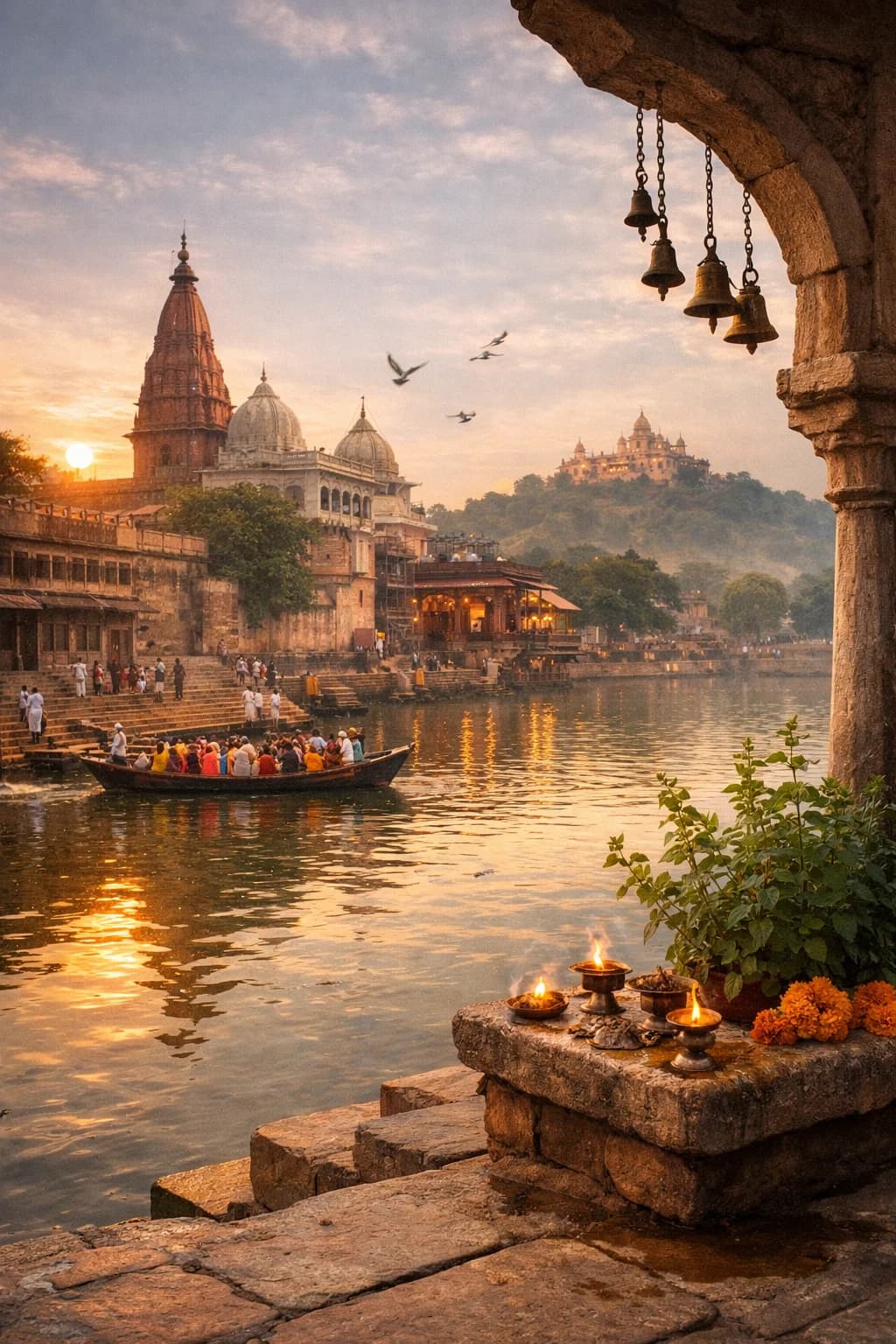
Vishram Ghat - the central, holiest ghat, where Krishna rested after slaying Kansa; the evening Yamuna aarti here is Mathura's signature
Birla (Gita) Mandir - a peaceful Mathura temple
Bhuteshwar Mahadev - a guardian Shiva of Mathura
Then on to Vrindavan: Banke Bihari, ISKCON, Prem Mandir
Browse all at the Famous Temples of Mathura Vrindavan hub.
Food & prasad nearby
The bazaars around Dwarkadhish are among the best in Braj for street food - dense Mathura peda (from a long-established sweet-house, not a platform stall), kachori-jalebi and bedai for breakfast, makhan-mishri and thick lassi in a clay kulhad. Favour busy, freshly-cooking stalls and drink sealed bottled water.
Author's tips from Gurudutt - what only a local knows
Time your visit to a jhanki window. This is the one temple where arriving "whenever" means standing before a drawn curtain - check the day's jhanki schedule first.
Do the Mathura core together: Dwarkadhish, then Vishram Ghat for the evening Yamuna aarti, then the Janmabhoomi.
Watch the bhog and shringar. Pushtimarg seva is the most opulent in Braj - the dress and the food-offering are part of the darshan, not a backdrop.
Greet with "Jai Shri Krishna" here - it's the haveli's own greeting.
Don't photograph the deity without asking and keep valuables close in the bazaar crowd.
In Mathura, Krishna is born a prisoner and worshipped a king - and at Dwarkadhish you bow not to the cowherd child but to the crowned Lord of Dwarka, in his own birth-city. - Gurudutt