Travel Guide · Travel Guides · Updated August 2026
Gayatri Tapobhumi Mathura: Timings, History, Aarti and Guide
By Gurudutt, Experience My India·12 August 2026
Quick Answer
Quick Enquiry
Key facts at a glance
Detail | Information |
What it is | A Gayatri temple and spiritual centre of the Gayatri Pariwar, Mathura |
Founded by | Pandit Shriram Sharma Acharya (Gurudev), early 1950s |
Dedicated to | Gayatri Mata and the Gayatri Mantra |
Known for | The Yagyashala and its perpetual sacred fire; daily yajnas |
Address | Gayatri Tapobhumi Rd, Masani, Mathura, Uttar Pradesh 281001 |
Open | Every day, about 5:30 AM to 9:00 PM |
Entry | Free |
Gayatri Tapobhumi Mathura: an overview
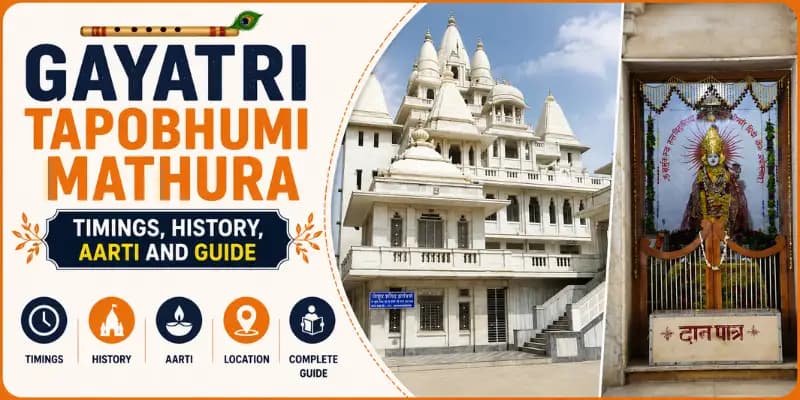
Gayatri Tapobhumi, in the Masani area of Mathura, Uttar Pradesh, is one of the great spiritual centres of the city, dedicated to Gayatri Mata and the Gayatri Mantra and revered as the birthplace of the All World Gayatri Pariwar, one of the largest spiritual families of India. Founded in the early 1950s by Pandit Shriram Sharma Acharya, known as Gurudev and Yugrishi, it is a place of Gayatri worship, daily yajna, meditation and Vedic ceremony, with a calm, purposeful atmosphere quite different from the Krishna temples of Braj.
This guide covers Gayatri Tapobhumi in full: its history and its founder, Pandit Shriram Sharma Acharya and the birth of the Gayatri Pariwar; what to see, the Gayatri temple, the great Yagyashala and its perpetual sacred fire; the daily activities of aarti, mass havan, sanskar ceremonies and meditation, with their timings; the entry, which is free; the festivals and the best time to visit; and how to reach it and the temples of Mathura nearby.
From the ground (Gurudutt): Gayatri Tapobhumi is a different kind of visit from the Krishna temples of Braj and that is its gift; come knowing it is a living centre of Gayatri worship and yajna, founded by Gurudev Pandit Shriram Sharma Acharya and time your visit for the worship. The morning is the most rewarding, when the aarti and meditation from about half past five lead into the mass havan in the great Yagyashala; the evening aarti with Nadayog, toward sunset, is beautiful too. It is on level ground in the city, welcoming and calm and easy for elders and families, who often come for a Mundan or Vidyarambh sanskar, which needs booking ahead. Entry is free. Dress simply and keep the quiet, disciplined spirit of the place. See our Mathura Vrindavan tour Package or message WhatsApp +91 7302265809.
Gayatri Tapobhumi at a glance
Here are the essentials of Gayatri Tapobhumi, Mathura, in one place.
Detail | Information |
What it is | A Gayatri temple and centre of the Gayatri Pariwar, Mathura |
Dedicated to | Gayatri Mata and the sacred Gayatri Mantra |
Founded by | Pandit Shriram Sharma Acharya (Gurudev) |
Founded | In the early 1950s; idol consecrated in 1953 |
Heart of the centre | The Yagyashala with its perpetual sacred fire (akhand agni) |
Daily worship | Morning aarti, meditation and mass havan; evening aarti and Nadayog |
Address | Gayatri Tapobhumi Rd, Masani, Mathura, Uttar Pradesh 281001 |
Open / Entry | Every day, about 5:30 AM to 9:00 PM / Free |
In one line: Gayatri Tapobhumi is the sacred Mathura centre of the Gayatri Pariwar, founded by Pandit Shriram Sharma Acharya, with a Gayatri temple, a great Yagyashala and daily yajnas, aarti and meditation, free to enter.
About the Tapobhumi and Pandit Shriram Sharma Acharya
Gayatri Tapobhumi was founded by Pandit Shriram Sharma Acharya, revered as Gurudev and Yugrishi, who lived from 1911 to 1990, a spiritual teacher, scholar and reformer of the Vedic tradition. By the tradition of the mission, he completed 24 great Gayatri sadhanas, the Mahapurascharans, each involving the recitation of some 2.4 million Gayatri mantras and on their conclusion, in the early 1950s, he established Gayatri Tapobhumi at Mathura, built, it is said, with holy soil gathered from some 2,400 places of pilgrimage across India. The idol of Gayatri Mata was consecrated in the prana-pratishtha of 1953, after Gurudev fasted for 24 days.
Through the yajnas and activities at the Tapobhumi, Gurudev gathered a family of dedicated volunteers and so the All World Gayatri Pariwar was born, dedicated to the worship of Gayatri, the practice of yajna and the Yug Nirman movement for spiritual and social reform; a grand thousand-altar Gayatri yajna in 1958 launched the wider mission. His consort, Mata Bhagwati Devi Sharma, revered as Vandaniya Mataji, donated her wedding jewellery for the establishment of the Tapobhumi and led the mission's work for the awakening of women. Later Gurudev established Shantikunj at Haridwar as the headquarters of the mission, while Mathura remained its sacred origin. We present this history as the mission records it, held with faith and recounted with reverence, the founding of the Gayatri Pariwar at Mathura.
What to see: the temple, Yagyashala and Akhand Agni
Gayatri Tapobhumi holds several revered sights within its peaceful grounds.
The Gayatri temple: the temple of Gayatri Mata, with the revered idol consecrated by Gurudev in 1953, the presiding deity of the centre, where devotees take darshan and offer the Gayatri Mantra.
The Yagyashala: the great hall of yajna, where the daily mass havans are performed, the heart of the centre's worship and of the practice of yajna for which the Gayatri Pariwar is known.
The Akhand Agni: the perpetual sacred fire kept in the Yagyashala, said by the tradition of the mission to have been lit long ago, over seven centuries past, by a saint and kept ever-burning.
The grounds and the memory of Gurudev: the calm gardens and halls of the centre, holding the memory of Pandit Shriram Sharma Acharya and the mantras of his sadhana, a place of quiet and reflection.
So the Gayatri temple, the great Yagyashala with its perpetual sacred fire and the peaceful grounds are what to see at Gayatri Tapobhumi. So take an unhurried, devotional visit. We present the centre with respect for the tradition of the mission, held with faith and recounted with reverence, the sacred origin of the Gayatri Pariwar in Mathura.
Daily activities: aarti, havan, sanskars and meditation
Gayatri Tapobhumi keeps a daily programme of worship and activity, so timing your visit for it makes the most of a visit.
Activity | Time | Details |
Morning Aarti & Meditation | 5:30 AM to 6:30 AM | Spiritual invocation and group meditation |
Mass Havans (Yajna) | 6:30 AM to 7:30 AM | Daily fire rituals in the primary Yagyashala |
Sanskar Ceremonies | 6:30 AM to 8:30 AM | Vedic rituals (Mundan, Vidyarambh) with prior booking |
Evening Aarti & Nadayog | 5:30 PM to 6:25 PM | Sunset prayers with spiritual audio discourses |
So the morning brings the aarti and meditation, then the mass havan and the sanskar ceremonies; the evening brings the aarti and Nadayog toward sunset. Visitors and devotees may take part in the aarti, meditation and the mass havan freely; the sanskars, such as a Mundan or a Vidyarambh, are performed with prior booking. So come in the morning for the havan or the evening for the aarti. Our mathura vrindavan temple timings guide covers the schedules of the region. We present the worship with respect for the tradition of the mission, held with faith.
Temple timings and entry
Gayatri Tapobhumi is open every day of the week, with the same hours through the week.
Day | Hours |
Monday to Sunday | 5:30 AM to 9:00 PM (open every day) |
Entry is free and any offering or donation is voluntary. The centre is at Gayatri Tapobhumi Rd, Masani, Mathura, Uttar Pradesh 281001. The daily programme runs in the morning, from about 5:30 to 8:30 AM and the evening, from about 5:30 to 6:25 PM, so plan your visit for one of these for the fuller experience and confirm the current timings locally, as they may vary a little on festivals and special days. So come to Gayatri Tapobhumi in the open hours, free of charge, ideally for the morning havan or the evening aarti.
Festivals and the best time to visit
The best time to visit Gayatri Tapobhumi is the morning, for the aarti, meditation and mass havan or the evening, for the aarti and Nadayog, when the centre is at its most devotional; within the year, the cool season, roughly October to March, is the most pleasant for a visit to Mathura. Our best time to visit vrindavan mathura guide covers the seasons.
Gayatri Tapobhumi is most vibrant at Gayatri Jayanti, the festival of the appearance of Gayatri Mata and at the great Vedic and mission festivals such as the Navratris, Guru Purnima and the anniversaries of Gurudev and Mataji, when special yajnas and programmes are held and devotees gather from far and wide; these days are glorious but more crowded. So come in the cool season, in the morning or evening and time it for Gayatri Jayanti or a festival for the fuller devotion, ready for larger gatherings. We present the festivals with respect for the tradition of the mission, held with faith.
How to reach and nearby temples
Gayatri Tapobhumi is on Gayatri Tapobhumi Road in the Masani area of Mathura, a short drive from the city centre and only a few kilometres from Mathura Junction railway station, reached in about 10 to 20 minutes by taxi, auto or e-rickshaw; it is about 12 to 15 km from Vrindavan. The nearest airports are Agra and Delhi. Our how to reach vrindavan guide covers arriving in the region.
Near Gayatri Tapobhumi, in Mathura, are the krishna janmabhoomi temple, the birthplace of Krishna; the dwarkadhish temple mathura; the Yamuna ghats such as Vishram Ghat; and the mathura guardian mahadevs; and, a short way off, the temples of Vrindavan such as the banke bihari temple. Our places to visit near mathura guide covers them all. So combine Gayatri Tapobhumi with the temples of Mathura and Vrindavan.
We arrange Mathura and Vrindavan tours that can include Gayatri Tapobhumi along with the Krishna Janmabhoomi, the Dwarkadhish temple and the temples of Vrindavan, with the transport, the routing, the timing around the programmes and a knowledgeable local guide. A shared day tour starts from around ₹1,499 per person, with temple darshan free throughout; our two-day mathura vrindavan tour covers the twin cities, our one-day vrindavan tour package Vrindavan and our same-day agra mathura tour package Agra and Mathura; our mathura vrindavan tour itinerary helps shape the days. Message me on WhatsApp at +91-7302265809 to plan your visit.
Tips and how to plan your visit
A few honest tips for Gayatri Tapobhumi: time your visit for the morning programme, from about 5:30 to 7:30 AM, for the aarti, meditation and mass havan or the evening aarti with Nadayog toward sunset, for the fullest experience; entry is free; dress modestly and keep the quiet, disciplined spirit of the centre; and if you wish a sanskar ceremony, such as a Mundan or Vidyarambh, book it in advance. It is on level ground in the city, easy for elders and families and welcomes all visitors, Indian and foreign.
Allow about an hour or two for a good visit, more to join a full programme and plan it into a day in Mathura, taking in the Krishna Janmabhoomi, the Dwarkadhish temple and the Yamuna ghats, and, if you have time, the temples of Vrindavan close by. So take an unhurried, devotional visit to Gayatri Tapobhumi, the sacred centre of the Gayatri Pariwar in Mathura and combine it with the Krishna temples of the twin cities for a fuller and varied pilgrimage.
Related guides
Meet Gurudutt — Your Mathura Vrindavan Guide
Not just a tour operator — Gurudutt was born and raised in Braj Bhoomi. He has spent over a decade personally guiding pilgrims through the sacred lanes of Mathura & Vrindavan.

Founder – Experience My India
Gurudutt
Founder · Experience My India