Travel Guide · Travel Guides · Updated October 2026
Is Vrindavan Safe? Monkeys, Crowds, Touts and Night Travel
By Gurudutt, Experience My India·19 October 2026
Quick Answer
Quick Enquiry
When guests ask me if Vrindavan is safe, I always reassure them honestly: yes, it is. In all my years hosting people here, serious trouble is vanishingly rare, this is a town of pilgrims and devotion, not danger. What I do brief every guest on is the small, practical stuff: watch the monkeys like a hawk near the old temples, keep your bag in front of you in the crowds, never buy a “VIP pass” because darshan is always free and after dark stick to the lit main roads and take an e-rickshaw. Do those few simple things and you will have a completely smooth, happy trip. See our Mathura Vrindavan tour Packages or message WhatsApp +91 7302265809.
Is Vrindavan safe? The honest overview
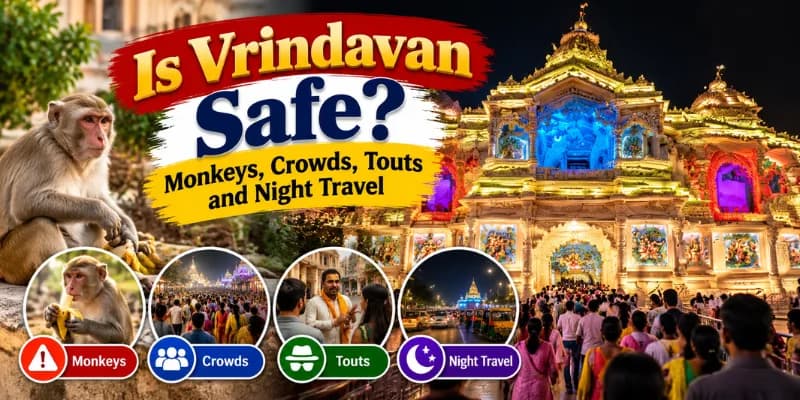
The straightforward answer is yes: Vrindavan is generally safe for all kinds of visitors, including families, elderly pilgrims and solo female travellers and the fear some people arrive with is largely unfounded. Violent crime against visitors is incredibly rare. This is first and foremost a devotional town, full of pilgrims, sadhus and ordinary families and its atmosphere is one of faith and festivity rather than threat. Most visitors come and go without the slightest trouble.
What that reassurance does not mean is that you can switch off entirely, because Vrindavan does have real, everyday hazards, they are simply mundane and opportunistic rather than dangerous. The honest list is short: the monkeys, the crowds, the touts and the dark lanes at night. None of these should put you off; they just call for a little awareness and a few simple habits. The key insight is that your precautions should shift as the day goes on, the daytime risks (monkeys, crowd-crush) are different from the night-time ones (dark, deserted lanes), so the sections below take each in turn and tell you exactly how to handle it.
The monkeys (the biggest daily hazard)
The single thing most likely to trouble you in Vrindavan is not a person but a monkey. The rhesus macaques in the older sections, especially around the banke bihari temple, nidhivan and the Loi Bazar area, are practised, highly calculated thieves. They do not want to hurt you; they want to grab something they can barter back for food.
Their targets. Spectacles, sunglasses and mobile phones above all. A monkey will pluck glasses straight off your face or snatch a phone from your hand while you are texting or taking a photo.
Defence. Before you enter the narrow temple lanes, put your glasses, phone and any visible valuables inside a zipped bag. Do not carry open food, plastic shopping bags or juice and drink cartons, which attract them instantly.
If something is snatched. Do not panic or try to fight the monkey, which can lead to a bite. Locals or vendors will usually help, the standard trick is to offer the monkey a small bribe, such as a packet of biscuits or a drink carton, so it drops your item in exchange.
Treated with this simple caution, the monkeys become a colourful part of the experience rather than a problem. The visitors who have trouble are almost always the ones wearing sunglasses and waving a phone in the worst lanes; keep your valuables zipped away there and you will likely be fine.
Crowds and pickpockets
The major temples, the banke bihari temple, prem mandir and the iskcon temple, draw huge, emotional waves of devotees and on busy days the crowd density can be intense. The risks here are twofold: the physical crush of a dense crowd, which can feel claustrophobic and is genuinely difficult for children and the elderly and the opportunistic pickpocketing or bag-slitting that any thick crowd attracts.
The defences are simple. Travel light and wear your backpack or crossbody bag on your front, keeping a firm hand on it in the crush. Carry only what you need and keep valuables secured and out of sight. If you are travelling with children or senior citizens, avoid the peak crowd times altogether: steer clear of weekends and major festivals such as Holi and Janmashtami unless you specifically want that intensity and instead target the early-morning window, roughly 5:00 AM to 7:00 AM, for the calmest, safest and most peaceful darshan. The crowds are rarely a safety threat in the sense of danger, but a sensible, light, front-facing bag and good timing turn the busiest temples from stressful to manageable. For picking your days, see best time to visit.
Touts and financial scams
Because pilgrims arrive with deep religious feeling, a few individuals try to exploit that devotion for money and knowing the ground truth protects you completely. The single most important fact is this: darshan is one hundred per cent free at every temple in Vrindavan. There is no such thing as an official “VIP pass”, “special entry” or paid line-skip sold on the streets, so anyone offering one is running a scam.
Your defence is simply firmness and knowledge. Politely but firmly ignore pushy “guides” or touts who offer to bypass queues or sell special entry, they have nothing genuine to sell. Be cautious too of anyone, including people presenting themselves as priests or ascetics, who aggressively demands a large donation; genuine giving (dakshina) is always voluntary, so give only according to your own comfort and capacity and never because you are pressured or made to feel guilty. Keep your money discreet, agree any price (for a rickshaw, a shop, an arranged guide) clearly in advance and do not hand over cash to strangers for promises of special access. None of this is sinister, it is the ordinary opportunism of a busy pilgrimage town and a calm, informed “no thank you” handles almost all of it.
Night travel and solo female safety
Vrindavan changes character after the main temples close and night falls, so your night-time precautions should differ from the daytime ones. Violent crime remains rare, but the narrow, winding alleys of the old town become dark, deserted and hard to navigate after about 9:00 PM and secluded, unlit areas can occasionally present the risk of eve-teasing (harassment) or opportunistic theft. This is true of many old Indian towns and is a matter of sensible caution rather than real danger.
The defences are simple and effective. After dark, stick to the main, well-lit roads and the busy areas and avoid walking down dark, empty side streets. To commute late at night, use an open, busy e-rickshaw on the main roads rather than walking through the lanes. For solo female travellers in particular, Vrindavan is generally safe with these ordinary precautions, dress modestly as everyone does in this dham, keep to populated, lit areas in the evening, trust your instincts and leave any situation that feels off, keep your phone charged and your accommodation’s contact handy and prefer arranged or reputable transport at night. Staying in a livelier, well-lit quarter (see the next section) makes evenings far easier and more comfortable.
Where to stay for peace of mind
Where you base yourself has a real effect on how safe and easy your evenings feel, so if safety and peace of mind are priorities, choose your area with that in mind. The modern temple quarters are the most comfortable: the area around Raman Reti (near the ISKCON temple) and the area near Prem Mandir stay livelier, better lit and much more walkable late into the evening than the deep old town. Basing yourself there means you can enjoy an evening aarti or a late meal and return to your room through busy, lit streets rather than dark lanes.
The atmospheric old-town lanes near Banke Bihari are wonderful to visit by day, but they empty and darken at night, so they are a less convenient base if you value easy, well-lit evenings. Wherever you stay, choose a well-reviewed property, keep a government ID handy for check-in, note your hotel’s exact location and contact so you can direct a rickshaw back after dark and you will have a secure, restful base. For areas and options, see our where to stay in vrindavan guide. A good location is quietly one of the best safety decisions you can make.
Planning a safe, smooth visit
Put the pieces together and a safe Vrindavan trip is mostly common sense applied at the right time of day. By day, guard against the monkeys in the old lanes and against the crowd-crush at the big temples, favouring early mornings. Handle touts with a firm, informed no, remembering darshan is always free. By night, stay on lit main roads and take e-rickshaws. Base yourself in a lively, well-lit quarter, travel light with a front-facing bag, keep a government ID and your hotel details handy and go at an unhurried pace. For building the itinerary and arrival, see places to visit in vrindavan and how to reach vrindavan.
Let a Brajwasi keep it smooth
The easiest way to sidestep every one of these small hazards is to have a local who knows the lanes, the timings and the tricks. As Brajwasis, we guide guests through the monkey-prone lanes and the crowd-crush safely, time darshan for the calm early hours, keep you clear of touts and fake “VIP” offers, arrange trusted transport, including after dark and book you into a comfortable, well-located stay, so families, elderly pilgrims and solo female travellers all feel looked after. A shared Vrindavan darshan starts from around 1499 rupees per person; see our vrindavan tour package or we design a private, comfortable itinerary. Message us on WhatsApp at +91-7302265809 with your dates.
Related guides
Book Your Mathura - Vrindavan Trip Today
📞 +91-7302265809
💬 WhatsApp: +91-7302265809
We Reply in 30 Minutes
Packages start from ₹1,999/ person | Rated 4.5★ / 204+ Reviews
Explore all: Mathura Vrindavan Tour Packages
Jai Shri Krishna
Meet Gurudutt — Your Mathura Vrindavan Guide
Not just a tour operator — Gurudutt was born and raised in Braj Bhoomi. He has spent over a decade personally guiding pilgrims through the sacred lanes of Mathura & Vrindavan.
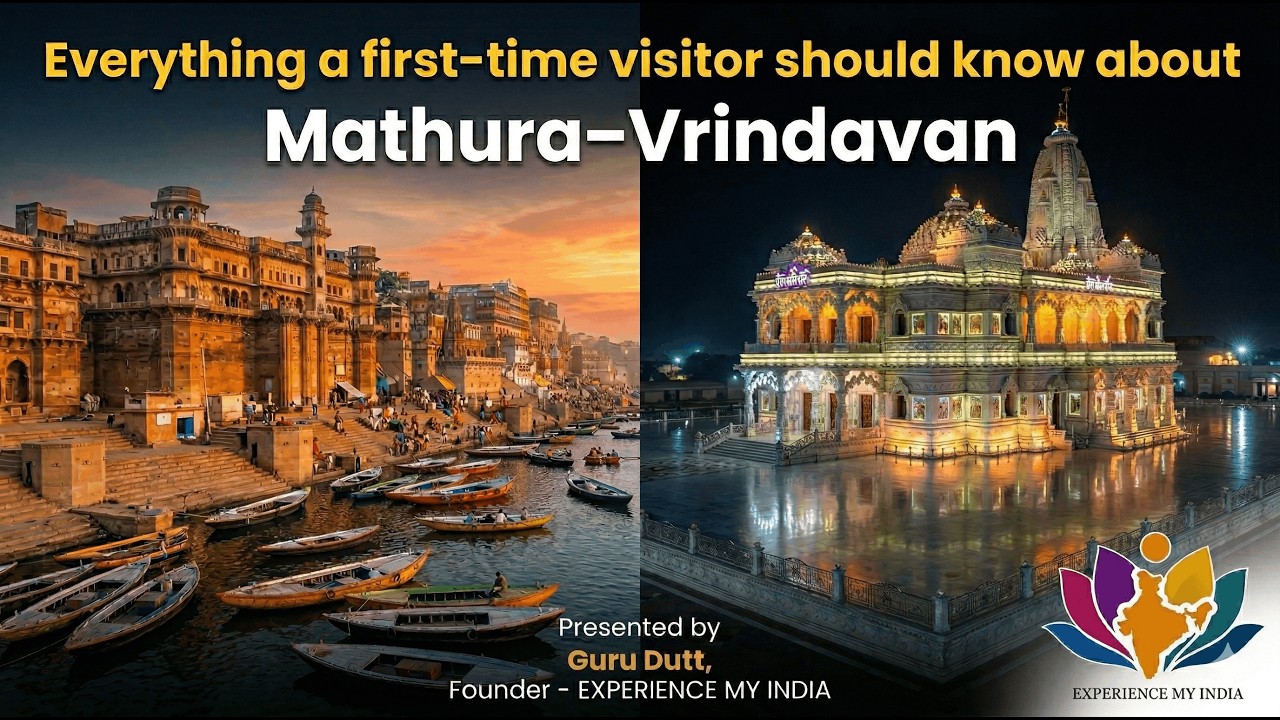
Founder – Experience My India
Gurudutt
Founder · Experience My India