Travel Guide · Travel Guides · Updated August 2026
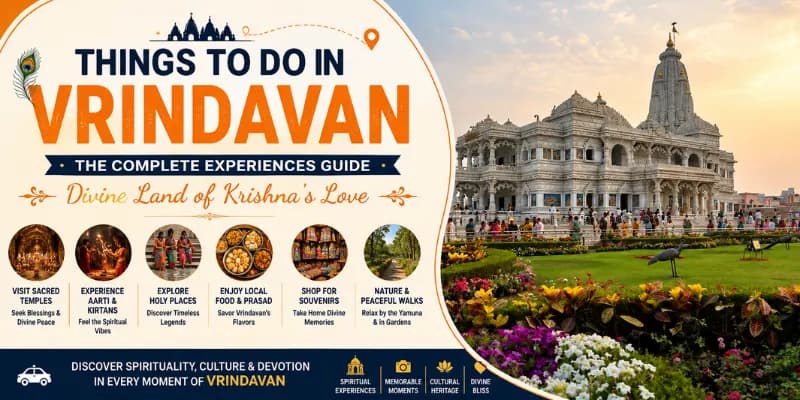
Things to Do in Vrindavan: The Complete Experiences Guide
By Gurudutt, Experience My India·4 August 2026
Quick Answer
Quick Enquiry
Key facts at a glance
Top temple | Banke Bihari, the beloved deity of Vrindavan |
Best evening thing | The Yamuna aarti at Keshi Ghat |
Best walk | The Vrindavan parikrama |
For the eye | Prem Mandir, lit up in the evening |
To buy | Attar, poshak, Laddu Gopal, prasad from Loi Bazaar |
To eat | Peda, kachori, chaat, lassi and thali |
Things to do in Vrindavan: an overview
Vrindavan, the town of Krishna's youthful pastimes, is above all a place of devotion, so the best things to do here are woven around its temples, its river and its living faith, though there is much for every kind of visitor. You can take darshan at its beloved temples, witness the Yamuna aarti in the evening, walk the sacred parikrama, visit the groves of the leelas, see a raas leela, shop the old bazaars, taste the sweets and street food and take day trips across the wider land of Braj. It is a small town, easily explored, but rich beyond its size.
This guide sets out the best things to do in Vrindavan as experiences, what to do rather than merely what to see, with honest, on-the-ground advice from a Brajwasi. Whether you come for a day or several, for deep devotion or simple curiosity, there is a Vrindavan for you. For when to come and how to arrive, see our best time to visit vrindavan mathura and how to reach vrindavan guides. Now to the things to do, beginning with the darshan that is the heart of it all.
From the ground (Gurudutt): A few honest tips before you start, to make everything smoother. Come early in the morning for the temples, which are calmer then and close through the middle of the day, reopening in the evening. Darshan is free everywhere in Vrindavan, so beware anyone selling special or paid darshan and keep offerings voluntary. Guard your phone and glasses from the monkeys, who are bold around the temples and snatch spectacles and prasad. Wear slip-off footwear, as you will remove it often and use the shoe stands. Dress modestly, carry small cash and water and move gently through the crowds. See our Mathura Vrindavan tour or message WhatsApp +91 7302265809.
Take darshan at the great temples
The heart of Vrindavan and the first thing to do, is to take darshan at its temples, of which there are said to be thousands. A handful are essential.
Banke Bihari: the most beloved temple of Vrindavan, of the enchanting deity Banke Bihari, revealed by Swami Haridas; the darshan here, lively and loving, is the essential Vrindavan experience. Come early to avoid the crush, which is intense at festivals.
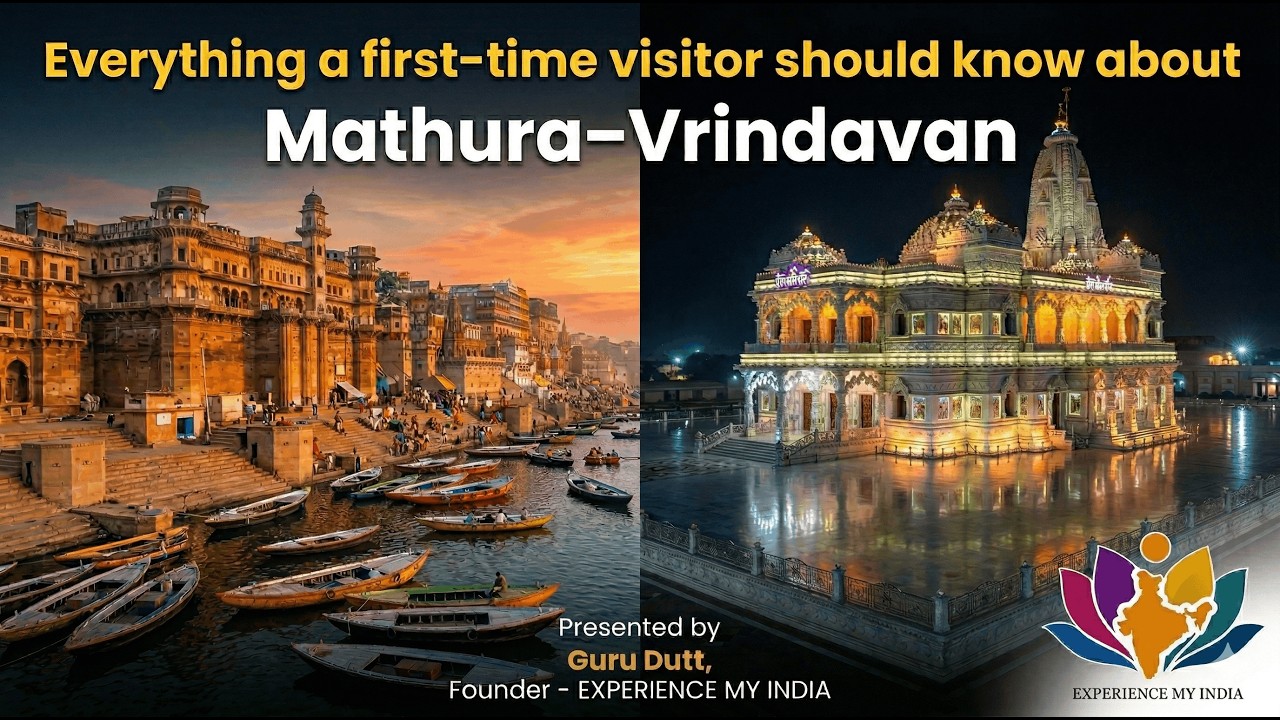
Prem Mandir: the vast, white marble temple of Radha Krishna and Sita Ram, dazzling by day and beautifully lit in the evening, with gardens and leela dioramas; a favourite of families and first-timers.
ISKCON, the Krishna Balaram Mandir: the temple of Krishna and Balaram in Raman Reti, full of kirtan and devotion, with the samadhi of its founder and the well-loved Govinda's dining.
The ancient Goswami temples: Radha Raman, of the self-manifested deity; Radha Vallabh; Govind Dev; the old Madan Mohan; and Radha Damodar, holding a Govardhan shila; the deep old heart of Vrindavan's devotion.
Rangji, Shahji and more: the grand South-Indian-style Rangji temple; the ornate Shahji temple; the goddess seat of Katyayani; and Gopeshwar Mahadev, the Shiva of Vrindavan.
Taking darshan at these temples, in the morning and again in the evening around the midday closure, is the core of a Vrindavan visit. Each has its own mood, from the loving liveliness of banke bihari temple to the grandeur of Prem Mandir and the deep devotion of the old Goswami temples. Do not try to see them all; choose a handful and take darshan unhurried, which is the true Vrindavan way. We recount the leelas and revelations of the deities as the cherished tradition of Braj, held with faith.
Witness the Yamuna aarti at Keshi Ghat
One of the most beautiful things to do in Vrindavan is to witness the Yamuna aarti at Keshi Ghat in the evening, when lamps are offered to the sacred river with song and bells, in a scene of great devotion and beauty, the lights reflected in the water at dusk. Keshi Ghat, the chief ghat of Vrindavan, revered by the tradition as the place where Krishna slew the horse demon Keshi, is a lovely spot to sit by the Yamuna and take in the riverside, the old buildings and the aarti.
So plan to be at Keshi Ghat for the evening aarti, one of the highlights of a Vrindavan day and enjoy the calm of the river beforehand. Our keshi ghat yamuna aarti guide covers the ghat and the aarti in full. A word of honesty: the Yamuna is sacred but polluted at Vrindavan, so revere the river and take its darshan, but think twice before bathing. The aarti and the riverside, at dusk, are a serene and memorable experience.
Walk the Vrindavan parikrama
A deeply rewarding thing to do is to walk the Vrindavan parikrama, the sacred circuit around the town, of about 10 to 11 km, taken by pilgrims as a devotional round, many barefoot, passing temples, groves and ghats along the way. It can be walked in a few hours, at an easy pace, ideally in the cool of the early morning or the evening and it takes you through the old, devotional heart of Vrindavan, away from the traffic.
So the parikrama is one of the finest ways to experience Vrindavan, on foot and reverently, taking in the sacred sites along its path. Our vrindavan parikrama route guide covers the route, the sites and how to walk it. If the full circuit is too much, walk a part of it or simply stroll the old-town lanes, which is an experience in itself, full of temples, bhajan, cows and colour. Wear comfortable footwear and go gently and let the sacred town reveal itself as you walk.
Visit the sacred groves and leela sites
Beyond the temples, Vrindavan holds sacred groves and leela sites of deep significance and atmosphere, well worth visiting for a quieter, deeper experience.
Nidhivan: the mysterious sacred grove of Swami Haridas, where, by the tradition, Krishna and Radha hold the raas each night, so that none may stay after the evening; a place of low, entwined trees and deep belief.
Seva Kunj: another sacred grove of the raas, near Nidhivan, cherished and revered, held by the tradition to be closed to all after dark.
Banshi Vat and Tatiya Sthan: the Maha Raas Sthali of Banshi Vat and the austere, lamp-lit ashram of Tatiya Sthan, for the deeper devotional heart of the old town.
Imli Tala and the riverside sites: the tamarind-tree site by the Yamuna revered in the tradition and the other leela spots of the old town.
Visiting these groves and sites, especially nidhivan, gives a quieter, more mysterious and devotional side of Vrindavan, away from the grand temples. They reward a reverent, unhurried visit. We present the leelas and mysteries attached to them, the nightly raas and the rest, as the cherished belief and tradition of Braj, held with faith, recounted with reverence rather than as documented fact. For the seeker of the deeper Vrindavan, these sites are unmissable.
See a raas leela and the festivals
A wonderful thing to do, if your timing allows, is to see a raas leela, the devotional dramatisation of Krishna's pastimes performed in Vrindavan, especially in the festival seasons, a beautiful and moving folk-devotional art. And to visit Vrindavan at one of its great festivals is an unforgettable, if crowded, experience.
Holi: Vrindavan's Holi is world-famous, from the flower Holi at Banke Bihari to the colour and joy across the town, in the days around the main festival; spectacular but very crowded.
Janmashtami: the birth of Krishna, the greatest festival of Braj, celebrated with midnight worship and huge fervour at the temples.
Radhashtami and Sharad Purnima: the birth of Radha and the full-moon night of the raas, both beautiful times in the town of Radha and Krishna.
Kartik and the deepdan: the holy month of Kartik, with the lamps of Diwali and the deepdan on the Yamuna, a lovely and auspicious season.
So if you can, time your visit for a festival or to catch a raas leela, for the ultimate Vrindavan experience, though be ready for great crowds and plan for safety and patience. Our best time to visit vrindavan mathura guide and our festival guides cover the seasons and the festivals. Even on an ordinary day, the devotion of Vrindavan has a festive warmth. We present the festivals and the raas as the cherished tradition of Braj.
Shop the old bazaars
A delightful thing to do in Vrindavan is to shop its old bazaars, above all Loi Bazaar and the lanes around Banke Bihari, for the special goods of the sacred town: fragrant attar, the alcohol-free perfume; poshak, the fine dresses for the deities; brass and marble Laddu Gopal idols and their cradles; tulsi and rudraksha malas; bangles and trinkets; and the famous pedas and prasad to carry home.
So set aside time to wander and shop the bazaars, a colourful, lively experience in itself and a chance to carry home the devotion of Vrindavan. Our mathura vrindavan shopping guide guide covers the markets, what to buy and how to bargain. A word of honesty: bargain gently, as prices are often quoted high to visitors; check the quality of silver and brass; and beware the monkeys near the market, who snatch glasses and bags. Shop in a relaxed spirit and enjoy the hunt for a memento of the holy town.
Taste the food of Vrindavan
Tasting the food is one of the simple joys of Vrindavan, a town of pure vegetarian, often onion-and-garlic-free, satvik fare. Do not miss the famous Mathura-Vrindavan peda, the milk sweet; the crisp kachoris with spiced potato; the chaat and the aloo tikki; the thick, cooling lassi and the rabri; and a hearty thali. ISKCON's Govinda's and other well-known eateries offer clean, satvik meals and the street stalls offer the local flavours.
So eat your way gently through Vrindavan, from a morning kachori to an evening peda, for a delicious part of the experience. Our famous food in vrindavan and mathura guide covers the dishes and where to find them. A word of honesty: choose busy, clean stalls for freshness, drink bottled or filtered water and start gently with the street food if you are not used to it. The pure, simple food of Vrindavan is part of its devotional character and a pleasure to discover.
Spiritual experiences and seva
For many, the deepest things to do in Vrindavan are the spiritual experiences beyond sightseeing: to sit in a temple or ashram and hear the bhajan and kirtan; to do a little meditation or japa by the Yamuna; to attend the discourse or the early-morning darshan of a revered living saint, as many now do; or to stay a night in an ashram and share its devotional rhythm. These give a taste of the living faith that is the soul of the town.
Vrindavan is also, in its compassion, a refuge for many widows and the elderly devout, cared for by ashrams and charitable organisations; visitors who wish to help can offer seva or donation through these bodies, quietly and with dignity, honouring the people as devotees and never treating them or their lives as a spectacle to be photographed. So a spiritual visit to Vrindavan can be one of devotion and of compassion. We speak of its saints and its charity with respect and encourage any seva to be offered humbly. This deeper, quieter Vrindavan is, for many, the most memorable of all.
Take day trips across Braj
Vrindavan is the gateway to the whole sacred land of Braj, so a fine thing to do is to take day trips to the sites around it.
Mathura, the birthplace of Krishna, only about 13 km away, with the Janmabhoomi, Dwarkadhish and the Vishram Ghat aarti.
Govardhan, the sacred hill Krishna lifted, about 25 km, for the parikrama and the kunds.
Barsana and Nandgaon, the towns of Radha and Krishna, about 45 to 50 km, for the Radha Rani temple and the Lathmar Holi country.
Gokul and Mahavan, the towns of Krishna's infancy, across the Yamuna, for a gentler, quieter side of Braj.
So build a day trip or two into your visit, to see the wider Braj beyond Vrindavan, the birthplace, the hill and the towns of Radha and Krishna. We arrange Vrindavan visits and Braj day trips with the transport, the routing, the timing around the temple closures and a knowledgeable local guide to bring the leelas alive, so you simply take darshan and enjoy. A shared day tour starts from around ₹1,499 per person, with darshan free throughout and our one-day vrindavan tour package and two-day mathura vrindavan tour cover the town and the twin cities. Message me on WhatsApp at +91-7302265809 to plan your Vrindavan experience.
Related guides
Meet Gurudutt — Your Mathura Vrindavan Guide
Not just a tour operator — Gurudutt was born and raised in Braj Bhoomi. He has spent over a decade personally guiding pilgrims through the sacred lanes of Mathura & Vrindavan.
Founder – Experience My India
Gurudutt
Founder · Experience My India