Travel Guide · Travel Guides · Updated July 2026
Weather in Mathura and Vrindavan: Temperature, Climate and Month-by-Month Guide
By Gurudutt, Experience My India·28 July 2026
Quick Answer
Quick Enquiry
Key facts at a glance
Climate | Humid subtropical: very hot summers, monsoon, mild winters |
Hottest | May and June, around 42 to 43 C by day, peaks near 45 C |
Coldest | January, days around 21 C, nights near 7 C, with fog |
Monsoon | July to September, with August the wettest month |
Annual rainfall | Roughly 700 mm, most of it in the monsoon |
Best weather | October to March, dry, clear and pleasant |
Weather in Mathura and Vrindavan: an overview
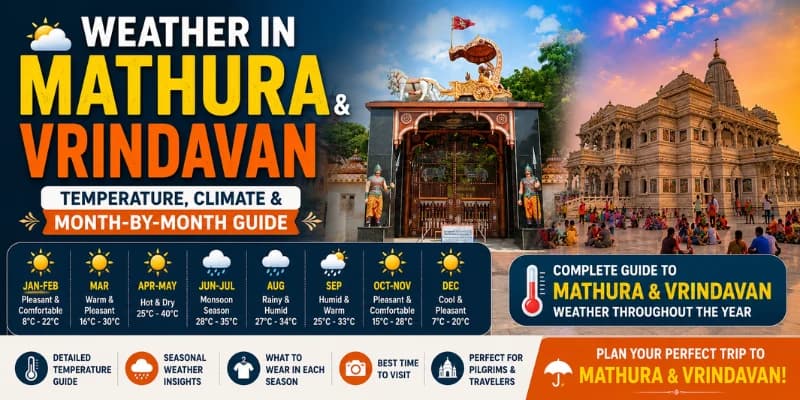
Mathura and Vrindavan sit only about 13 km apart on the Yamuna in Uttar Pradesh, so they share the same weather and climate and everything in this guide applies equally to both. Their climate is the humid subtropical type of the north Indian plains: very hot summers, a monsoon season of rains and mild, pleasant winters, with big swings between the seasons and even between day and night.
In short, the temperature in Mathura and Vrindavan ranges from a scorching 43 C or more in the height of summer, in May and June, down to cool winter nights around 7 C in December and January. The monsoon brings the rains from July to September. This guide breaks down the weather month by month, with the temperatures, the rainfall and what to expect and pack, so you can plan your visit around the conditions. For the decision of when to come, our best time to visit vrindavan mathura guide takes it further.
From the ground (Gurudutt): The single most useful thing to know: the weather divides the year into a punishing hot season and a lovely cool one. From roughly April to June it is genuinely fierce, 42 C and up and the monsoon that follows is humid; from October to March it is dry, clear and pleasant. If you have a choice, come in the cool months. If you must come in summer, plan around the heat, indoors or resting at midday, out in the early morning and evening. See our Mathura Vrindavan tour or message WhatsApp +91 7302265809.
Month-by-month temperature and rainfall
Here is the weather in Mathura and Vrindavan month by month, with the average daytime high and night-time low temperatures and the approximate rainfall. These are typical averages; any given day can vary, so treat them as a guide to the pattern rather than a forecast.
Month | Avg high | Avg low | Rainfall | Conditions |
January | 21 C | 7 C | About 10 mm | Cold, foggy mornings, pleasant days |
February | 25 C | 10 C | About 15 mm | Pleasant, mild, clear |
March | 31 C | 15 C | About 10 mm | Warming, pleasant, Holi season |
April | 38 C | 21 C | About 7 mm | Hot and dry |
May | 43 C | 28 C | About 12 mm | Scorching, the hottest month |
June | 42 C | 30 C | About 55 mm | Very hot, monsoon nears |
July | 35 C | 27 C | About 190 mm | Monsoon, humid, rainy |
August | 33 C | 26 C | About 195 mm | Wettest month, humid |
September | 34 C | 25 C | About 90 mm | Monsoon easing, humid |
October | 33 C | 19 C | About 25 mm | Pleasant, drying out |
November | 29 C | 12 C | About 5 mm | Lovely, dry, the driest month |
December | 23 C | 8 C | About 5 mm | Cool, foggy mornings |
The pattern in one line: Hot and dry from April, scorching in May and June around 43 C, humid monsoon rains July to September, then cooling to a dry, pleasant October through March, with January the coldest at nights near 7 C. Roughly 700 mm of rain falls a year, most of it in the monsoon.
The seasons at a glance
Mathura and Vrindavan really have four seasons and knowing them shapes any visit.
Summer, April to June: very hot to scorching, 38 to 43 C and rising, dry, with fierce sun and hot winds; demanding for sightseeing.
Monsoon, July to September: warm and humid, 33 to 35 C, with the year's rains, heaviest in August; green but sticky and wet.
Autumn and winter, October to February: the pleasant season, cooling from warm October to cold January nights, dry and clear, the best time to visit.
Spring, late February to March: mild and pleasant, warming toward summer and the season of Holi, before the heat sets in.
The great divide is between the hot half of the year, April to September and the cool, dry half, October to March. The cool half is far more comfortable for temples, parikrama and sightseeing, which is why it draws the most pilgrims.
Summer: April to June
Summer in Mathura and Vrindavan is genuinely fierce. From April the heat builds fast and May and June are scorching, with average daytime highs around 42 to 43 C and peaks that can reach 45 to 47 C, under a relentless sun, often with hot, dry winds. Nights offer only modest relief, staying around 28 to 30 C in May and June. It is dry heat, with humidity low until the monsoon nears.
This is the hardest time to visit. Sightseeing, temple queues and above all the outdoor parikrama walks are exhausting and can be genuinely risky in the midday heat. If you come in summer, do your temple visits and walking in the early morning and the evening, rest indoors through the fierce midday hours, drink plenty of water and protect yourself from the sun. It is manageable with care, but the cool season is far kinder, especially for elders and children, as our mathura vrindavan with elderly parents guide stresses.
Monsoon: July to September
The monsoon arrives around late June or early July and runs through September, bringing most of the year's rain. The temperature drops from the summer extremes to around 33 to 35 C, but the humidity rises sharply, often to 70 or 80 percent, so it feels sticky and close. August is the wettest month and rains can be heavy at times, though they often come in bursts rather than all day and the land turns green and fresh.
The monsoon is a mixed season for visiting: the heat is broken and the greenery is beautiful, but the humidity, the wet and the occasional flooding of low lanes can be trying and the Yamuna runs high. It is also, importantly, the season of Janmashtami, Krishna's birth, in August, the greatest festival of the year here, when the spiritual atmosphere is extraordinary despite the rains. Pack rain protection, a compact umbrella and quick-drying clothes and expect some wet feet in the lanes.
Autumn and winter: October to February
This is the pleasant season and the best time to visit. From October the rains end and the weather dries and cools into a long, lovely spell. October is warm and comfortable, around 33 C by day; November is beautiful, dry and mild and the driest month of the year, coinciding with the sacred month of Kartik; and December and January are the coolest, with pleasant days around 21 to 23 C but genuinely cold nights and early mornings, dropping to around 7 to 8 C, sometimes lower.
Two honest notes for winter. First, December and January mornings are often thick with fog, which can delay trains and flights and veil the Taj on a day trip to Agra, though it usually lifts by mid-morning. Second, the nights and dawns are properly cold, so warm layers are essential for early temple visits and the dawn Yamuna aarti. With those in hand, the cool, clear, sunny days of this season are perfect for temples, parikrama and sightseeing, which is why most pilgrims choose it.
Spring and Holi: February and March
Late February and March are a short, lovely bridge between winter and summer: mild, pleasant and warming, with comfortable days and cool nights, before the heat sets in from April. It is a very pleasant time to visit, with clear skies and gentle temperatures.
March is also the season of Holi and in the land of Krishna, Holi is celebrated with world-famous intensity and for far longer than elsewhere, including Barsana's Lathmar Holi. The weather is warm but not yet punishing, which helps, though the crowds are enormous. Our braj festival calendar gives the dates, which follow the lunar calendar and shift each year.
Rainfall and humidity
Mathura and Vrindavan receive roughly 700 mm of rain a year and the great majority of it falls in the monsoon months of July, August and September, with August the wettest. The rest of the year is largely dry: the winter sees only occasional light showers and April and May are very dry indeed. So for most of the visiting season, October to March, rain is not a significant concern.
Humidity follows the same pattern. It is low in the hot, dry pre-monsoon of April and May, sometimes below 35 percent, then rises sharply with the monsoon to 70 or 80 percent in July and August, making the warmth feel far heavier, before easing through autumn to comfortable levels in the cool season. So summer is a dry heat and the monsoon a humid one, while the pleasant winter months are comfortably moderate.
What to wear and pack by season
What to pack depends heavily on the season, though modest dress for temples applies year-round, as our vrindavan dress code and temple etiquette guide explains.
Summer (April to June): light, loose, breathable cottons, a hat or scarf for the sun, sunglasses, high-factor sunscreen and a refillable water bottle; dress modestly but as coolly as you can.
Monsoon (July to September): a compact umbrella or light rain jacket, quick-drying clothes, waterproof sandals for the wet lanes and a dry bag for phone and valuables.
Winter (December to January): warm layers, a proper jacket and a shawl, cap and socks for the cold early mornings and the dawn aarti; days are mild but dawns and nights are cold.
Autumn and spring (October to November, February to March): light layers, a cotton day outfit with a light sweater or shawl for cooler evenings; the easiest packing of the year.
Year-round, bring comfortable shoes you can slip off easily at temples, since you will remove footwear often and modest clothing that covers shoulders and knees. Beyond that, pack for the season and you will be comfortable.
Weather and the festivals
The great festivals fall across very different weather, which is worth knowing.
Holi, in March, comes in pleasant, warming spring weather, the most comfortable of the big festivals, though the most crowded.
Janmashtami, in August, falls in the humid monsoon, warm and often wet, but its spiritual intensity is unmatched.
Radhashtami, in September, comes as the monsoon eases, still humid but drying.
The month of Kartik, in October and November, enjoys the loveliest weather of the year, dry, mild and clear, a beautiful and sacred time to visit.
So if you want both a great festival and gentle weather, the Kartik season and Holi are the sweet spots, while Janmashtami asks you to accept the monsoon for the sake of the occasion. Our braj festival calendar gives all the dates.
The best weather to visit and today's forecast
For the most comfortable weather, visit between October and March, when the days are dry, clear and pleasant and the fierce heat and the monsoon are both absent; November and February are especially lovely. Avoid the scorching May and June if you can and be ready for humidity if you come in the monsoon. This is the same window our best time to visit vrindavan mathura guide recommends and it is why most pilgrims come then.
A note on today's weather: this is a climate guide, giving the typical, average conditions for each month, which is what you need for planning a trip weeks or months ahead. For the live forecast for today, this week or your travel dates, check a current weather service close to your visit, since any given day can differ from the average. Plan around the season using this guide and confirm the short-term forecast nearer the time.
Whenever you come, we plan trips around the weather as much as the darshan, the early starts in summer, the fog buffers in winter, the rain sense in monsoon, so your visit is comfortable in any season. A shared day tour starts from around ₹1,499 per person, darshan free throughout and we tailor the timing to the conditions. To plan the whole trip, see our how to plan a vrindavan mathura trip guide or, to arrive, our how to reach vrindavan guide and message me on WhatsApp at +91-7302265809 with your dates and I will advise on the weather and plan around it. To book a comfortable-season trip, see our vrindavan tour package.
Related guides
Meet Gurudutt — Your Mathura Vrindavan Guide
Not just a tour operator — Gurudutt was born and raised in Braj Bhoomi. He has spent over a decade personally guiding pilgrims through the sacred lanes of Mathura & Vrindavan.

Founder – Experience My India
Gurudutt
Founder · Experience My India