Travel Guide · Festivals & Events · Updated September 2026
Radhashtami 2026: Date, Barsana Celebrations and Puja Vidhi
By Gurudutt, Experience My India·1 September 2026
Quick Answer
Quick Enquiry
Key facts at a glance
Detail | Information |
Date | Saturday, September 19, 2026 |
Occasion | Appearance day of Srimati Radharani |
Tithi | Bhadrapada Shukla Ashtami (15 days after Janmashtami) |
Ashtami tithi begins | 1:00 PM, September 18, 2026 (per panchang) |
Ashtami tithi ends | 3:26 PM, September 19, 2026 (per panchang) |
Madhyahna puja muhurat | About 11:01 AM to 1:28 PM, September 19 (varies by location) |
Chief centre | Barsana, at the Shriji (Ladli Ji) Temple |
Radhashtami 2026: the date, tithi and muhurat
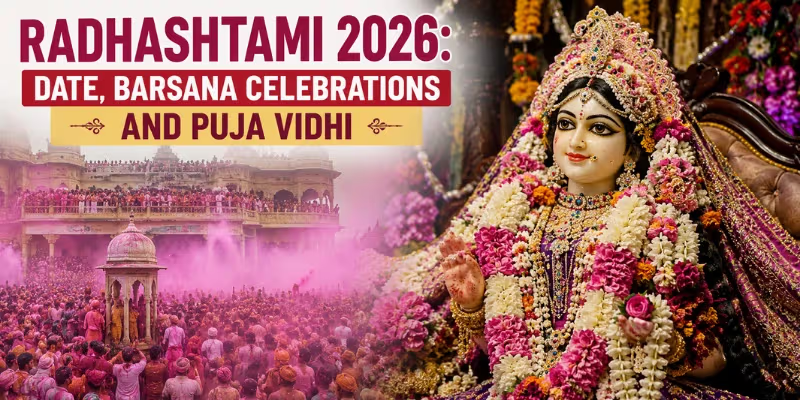
Radhashtami 2026 falls on Saturday, September 19, the sacred appearance day of Srimati Radharani, kept on the eighth day of the bright fortnight of Bhadrapada, exactly fifteen days after Krishna's own appearance on Janmashtami. By the panchang, the Ashtami tithi begins at 1:00 PM on September 18 and ends at 3:26 PM on September 19 and the Madhyahna puja muhurat, the noon hour that marks the moment of Radha's appearance, runs about 11:01 AM to 1:28 PM; timings vary a little by city, so check your local panchang. For all of Braj this is one of the greatest days of the year, softer and deeper even than Janmashtami and to spend it in Radha Rani's own land, a mathura vrindavan tour package with Experience My India can bring you to Barsana for her birthday.
From the ground (Gurudutt): Radhashtami is the dearest day of all to us Brajwasis, dearer even than Janmashtami, for it is the birthday of our own Ladli Ji, Radha Rani. In Barsana that day the very air is Radhe Radhe; the hill temple is dressed like a bride, the conches and bells sound at noon for her appearance and the whole town weeps with joy. I have carried this name in my heart since I was a boy. If you can come to Barsana for Radhashtami, come; but come early and with patience, for all of Braj comes with you. Radhe Radhe. See our Mathura Vrindavan tour Package or message WhatsApp +91 7302265809.
Who is Srimati Radharani
Srimati Radharani is the eternal beloved of Lord Krishna and, in the devotion of Braj, the very heart of the divine. She is understood not as a mortal woman but as Krishna's own hladini shakti, his pleasure potency, the source of his joy and so she is called Krishna Vallabha, she who brings delight to Krishna. She is revered as an incarnation of Goddess Lakshmi and above all as the embodiment of prema, pure, selfless love and of bhakti itself; the gopis' devotion and all the sweetness of Vrindavan flow from her. In the Braj tradition it is said that the worship of Krishna is incomplete without the worship of Radha and that it is through her grace that one attains Krishna-prema, love for the Lord. Her name is chanted first: Radhe Krishna, Radhe Radhe. To honour Radha is the surest way to Krishna's heart.
The significance of Radhashtami
Radhashtami, also called Radha Ashtami or Radha Jayanti, marks Radha Rani's divine appearance and it carries a special place in the devotional year:
The appearance of divine love. The day celebrates the coming of Radha, the personification of love and devotion, without whom, the tradition holds, the worship of Krishna is not complete.
Fifteen days after Janmashtami. Radha appeared exactly a fortnight after Krishna, on the bright Ashtami of Bhadrapada, the two appearances bound together as the divine pair themselves are bound.
The noon appearance. Where Krishna appeared at midnight, Radha is said to have appeared at midday, which is why her worship and abhisheka are performed at the Madhyahna, the noon hour, the peak of her celebration.
A day to seek Radha's grace. Devotees keep the day to seek her blessing and, through her, Krishna-prema; the fast of Radhashtami is said to grant the merit of visiting all holy places.
Radha's appearance: Rawal and Barsana
Two places in Braj hold Radha's earliest story and both are revered on Radhashtami. According to a beloved tradition, Radha appeared at Rawal, a quiet village on the north bank of the Yamuna near Mathura, where Vrishabhanu Maharaj is said to have found her as a radiant infant resting upon a lotus, come not from a womb but from divine light. She was then raised in Barsana, the town of her father Vrishabhanu and her mother Kirti, which has ever since been her own beloved town, the heart of her worship. Both are honoured: the radha rani temple rawal at her appearance place, and, in Barsana, the kirti mandir barsana dedicated to her mother and her birth, alongside the great hilltop radha rani temple barsana and the maan mandir barsana upon the Barsana hills.
Radhashtami in Barsana
Nowhere is Radhashtami kept as it is in Barsana, Radha Rani's own town, where the celebration is the greatest in all India. The Shriji Temple, also called the Ladli Ji Temple, crowns the Barsana hill on the site held to be her birthplace, one of the very few temples in Braj where Radha is worshipped as the primary, independent deity. On her appearance day:
The noon abhisheka. At the Madhyahna, the noon hour of her appearance, the deity is bathed in a grand abhisheka amid the sound of conches, bells and the ceaseless chant of Radhe Radhe, the moment of her birth celebrated with overflowing joy.
The great shringar. In the days before, the temple and the deity receive an elaborate shringar, adorned and dressed in splendour, the hill temple made beautiful as a bride.
Parikrama, raslila and bhandara. Devotees walk the parikrama of the Barsana hills, raslila performances retell Radha and Krishna's leelas and bhandara, free community feeding, feeds thousands through the day.
The temple crowns the hill, so reaching the darshan means a climb up the steps, with palanquins for those who cannot manage it. For the darshan hours, which are special and extended on the festival, see our mathura vrindavan temple timings guide and confirm the current-year timings before you travel, as the crowds on this day are immense.
Radhashtami in Vrindavan and across Braj
Beyond Barsana, all of Braj keeps Radha's day. In Vrindavan, the Radha Vallabh temple and the many Radha-Krishna temples ring with the joy of her birth, the cry going up that Radha Pyari, the beloved, has taken birth. Nandgaon, Rawal and other Radha temples across Braj hold their own celebrations and at Radha Kund, where bathing is otherwise kept sacredly rare, devotees gather through the night of Radhashtami to take a holy dip and seek her grace. The groves of the seva kunj vrindavan and the braj yamuna ghats and leela sites and temples such as the banke bihari temple, all share in the devotion of the day.
The Radhashtami puja vidhi, step by step
For those who wish to keep Radhashtami at home, here is a simple step-by-step vidhi. The main rituals are best performed during the Madhyahna puja muhurat, about 11:01 AM to 1:28 PM on September 19, 2026:
1. Morning purification. Wake before sunrise in the Brahma Muhurta, bathe and clean the puja altar. Wear clean, fresh clothes, preferably yellow or light colours.
2. Sankalpa. Sit before the altar, take a little water in your right hand and make a formal vow, the sankalpa, to observe the Radhashtami fast with full devotion.
3. Abhisheka. Place the idol or picture of Radha Rani, with Lord Krishna, on a brass plate and bathe the deity with panchamrita, the mixture of milk, curd, honey, ghee and jaggery, followed by clean water.
4. Shringar. Wipe the deity dry, dress Radha Rani in beautiful new clothes and offer jewellery, fresh flowers, especially lotus or marigold and fragrant chandan, sandalwood paste.
5. Bhog. Offer a special vegetarian feast prepared without onion or garlic; traditional offerings include arbi ki sabji, puri, halwa, malpua and milk sweets such as kheer.
6. Aarti and prayers. Light a ghee lamp and incense, perform the Radharani aarti, sing devotional bhajans and chant her holy names.
7. Kshama prarthana. Conclude by bowing down and asking forgiveness for any unintended mistakes made during the rituals.
Fasting on Radhashtami
The Radhashtami fast is dear to devotees and is said to grant the spiritual merit of visiting all the holy places. Its rules differ from Janmashtami:
A half-day, noon fast. Unlike the midnight fast of Janmashtami, the strict fast of Radhashtami is kept only until noon, the Madhyahna, when Radha appeared.
Nirjala or phalahar. Strict devotees keep a nirjala fast, without even water, until noon; those who cannot may take water, fresh fruit and milk before noon as phalahar.
Breaking the fast (parana). After the noon abhisheka and the offering of bhog, devotees break the fast.
The vrat meal. The meal taken after noon should be a vrat meal: without grains, wheat, rice, lentils or table salt, using instead rock salt (sendha namak) and fasting ingredients such as sabudana, kuttu (buckwheat) or singhara (water chestnut) flour.
Visiting Barsana and Braj for Radhashtami
To be in Barsana for Radhashtami is one of the great experiences of Braj devotion, but it asks for planning, as the crowds are among the largest of the year. A few honest words:
Come early. Reach Barsana and begin the climb to the Shriji Temple well before the noon peak, as the approach and the hill fill early and the wait can be long.
The hill climb. The temple crowns Bhanugarh hill, reached by a flight of steps; wear comfortable footwear, carry water and use a palanquin if the climb is hard.
Plan around the crowds. Expect huge gatherings, road diversions and slow movement; a guide who knows the town and the darshan flow saves time and stress on the day.
Combine with the Radha sites. Many pilgrims pair Barsana with Nandgaon, Rawal and the Vrindavan temples over a fuller Radhashtami trip through Braj.
Our vrindavan to barsana distance guide covers reaching Barsana from the temple towns and our how to commute in vrindavan guide the local transport and the hill approach.
Tips for the day
If you keep the fast, plan for the half-day noon vrat and prepare a vrat meal of sabudana, kuttu or singhara with rock salt for after the parana.
Perform the main abhisheka and puja in the Madhyahna window around noon, the hour of Radha's appearance.
Offer flowers, especially lotus or marigold and a bhog without onion or garlic and chant Radhe Radhe through the day.
If you go to Barsana, start very early, wear comfortable footwear for the climb and keep your belongings close in the crowds.
Book and travel early for a Radhashtami visit, as it is among the most crowded and beloved days in all of Braj.
If you would like to be in Barsana for Radhashtami or to keep Radha Rani's season on pilgrimage through Braj, we plan the journey with a comfortable vehicle, the darshan and the hill climb arranged and a Braj-born guide who loves Barsana. A shared day tour starts from around ₹1,499 per person, with darshan free and dedicated Radhashtami visits can be arranged; message us for current pricing. Our govardhan barsana tour pairs Barsana with Govardhan in a day, our mathura vrindavan tour adds the twin cities and the braj 84 kos yatra covers the whole of Braj. Message me on WhatsApp at +91-7302265809 to plan your Radhashtami darshan.
Related guides
Meet Gurudutt — Your Mathura Vrindavan Guide
Not just a tour operator — Gurudutt was born and raised in Braj Bhoomi. He has spent over a decade personally guiding pilgrims through the sacred lanes of Mathura & Vrindavan.
Founder – Experience My India
Gurudutt
Founder · Experience My India