Travel Guide · Travel Guides · Updated October 2026
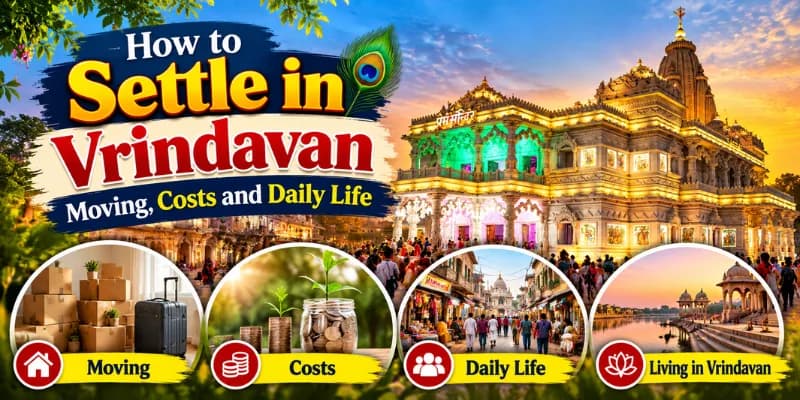
How to Settle in Vrindavan: Moving, Costs and Daily Life
By Gurudutt, Experience My India·17 October 2026
Quick Answer
Quick Enquiry
Housing: buy, ashram seva or rent first
Where you live depends on your budget and your spiritual goals; there are three broad paths:
Rent first, to experience the town. This is the wisest first step for almost everyone: rent a local apartment or stay in a long-stay guest house for a season before committing any money, to experience daily life, learn the areas and be sure Vrindavan suits you, before you buy or make a permanent move. For how to do a long stay, see our staying a month in vrindavan guide.
Buy an apartment, for a settled base. For committed, permanent devotees, buying a 1 BHK or 2 BHK flat in a secure, gated complex, such as those on Sunrakh Road or near Prem Mandir and the ISKCON temple, gives a stable home for daily practice without the stress of frequent moving. Real-estate prices in the premium areas near the main temples have risen significantly, so budget carefully and take proper legal and professional advice, verifying title and approvals, before buying any property.
Ashram living through seva. If you prefer a simpler life or are on a strict budget, many settle by taking up seva, voluntary service, in an ashram in exchange for basic shelter and food; a deeply devotional, economical way to live, suited to those drawn to a life of service and simplicity rather than their own household. See our Mathura Vrindavan tour Packages or message WhatsApp +91 7302265809.
The real cost of living in Vrindavan
Daily necessities, above all food, remain very affordable, while real-estate prices in the premium areas have risen sharply. A rough picture of baseline expenses, by lifestyle:
Expense | Ashram / simple living | Apartment / modern living |
Accommodation | Free through seva or roughly ₹500 to ₹3,500 a night for short-term ashram rooms | Variable rent; high purchase prices near the main temples |
Food and meals | Sattvic vegetarian meals often included in ashram arrangements | Affordable local pure-vegetarian food, markets and prasad |
Daily essentials | Minimal; purified water jars at about ₹20 each | Standard utilities, internet and building maintenance fees |
So a simple, devotional life can be led very cheaply, while a comfortable modern household costs more, chiefly for the home itself. All figures are indicative and change; for a nightly-stay budget picture, see our budget hotels in vrindavan under 1000 guide and plan a trial long stay with the staying a month in vrindavan guide.
Making a living in a holy town
This is the hardest practical truth of settling in Vrindavan and it must be faced honestly: earning a livelihood locally can be difficult, because Vrindavan is fundamentally a religious centre, not a commercial or business hub, so conventional local jobs and careers are limited. Most long-term residents therefore do not rely on local earnings; they live on remote work, a pension, savings or portable digital skills that they can practise from anywhere. Before you settle, be clear and realistic about how you will support yourself for the long term; those who come with a secure income, a pension or a remote livelihood settle comfortably, while those who assume they will easily find local work often struggle. Sort out your income first, then move.
Daily life and infrastructure realities
Living in Vrindavan, as opposed to visiting, means adapting to some real local facts; forewarned is forearmed:
The water is saline, so plan for it. The groundwater in Vrindavan is highly saline and hard, so for drinking and cooking you must rely on a good RO (reverse-osmosis) filter system or buy the large purified-water commercial jars, commonly around ₹20 each; factor this into your home setup and your daily routine from the start.
The festival crowds are intense. During the great festivals, Janmashtami, Radhashtami, the Kartik season and Holi, the town swells with huge numbers of pilgrims and the roads and lanes near the main temples such as Banke Bihari and Prem Mandir become very congested; as a resident you learn to plan your movements and errands around these peaks. See our is vrindavan crowded today guide for the crowd patterns.
Connectivity is good. Vrindavan is roughly two and a half to three and a half hours from Delhi via the Yamuna Expressway, which makes family visits, travel and, importantly, medical commutes to the city relatively straightforward; this good connectivity is one of the real advantages of settling here rather than in a remoter holy place.
Settling for retirement and healthcare
Many come to settle in Vrindavan for retirement, drawn by the holy atmosphere and it can be a beautiful place to spend one's later years; but this needs special, clear-eyed care:
Do not confuse a holy atmosphere with a healthcare plan. This is the single most important point for anyone relocating for retirement: a peaceful, devotional setting is not a substitute for proper medical care. Plan your healthcare deliberately, know where the good hospitals and emergency services are, how quickly you can reach them and how your medical needs and insurance will be met, before you move, not after.
Choose the neighbourhood for safety and access, not just closeness to a temple. For a retiree, the right neighbourhood has direct vehicle access (so an ambulance or car can reach your door), minimal exposure to the worst crowd crush and close proximity to emergency medical support; a quieter, well-connected gated community a short ride from the temples is usually far wiser than a room deep in the congested lanes.
Think about support and community. Consider how you will manage daily help, companionship and care as you age; the growing community of settled devotees, the ashrams and local support can help, but plan for it rather than assuming it. A trial long stay lets you test all of this before you commit.
This is general guidance, not medical advice; anyone relocating for health or retirement should take proper medical and professional advice for their own situation.
How to settle smoothly, step by step
1. Visit and then live here for a while. Beyond pilgrimage trips, come and live in Vrindavan for a month or a season first, on a long stay, to experience the real daily life, the water, the crowds, the rhythm, before any big decision.
2. Sort out your income. Make sure of a secure long-term livelihood, a pension, savings or remote work, before you move, as local earning is limited; this is the foundation everything else rests on.
3. Rent before you buy. Rent in the area and style you think you want and live there a while, before committing money to a purchase; this prevents costly mistakes and lets the right choice reveal itself.
4. Choose the area wisely. Favour a safe, well-connected neighbourhood with vehicle access and good services, near but not in the congested core, especially if you are older or have health needs.
5. Set up the practical basics. Arrange your RO water, utilities, internet, local SIM, banking and healthcare early and learn the quick-commerce and local markets, so daily life runs smoothly from the start.
6. Take professional advice before buying. For any property purchase, take proper legal and professional advice, verify the title and approvals and do not rush; real estate is the biggest financial step and the one most worth getting right.
How to plan your move
We help devotees explore settling in Vrindavan the wise way, starting with a long, lived-in stay rather than a rushed move, with local support on the ground to help you understand the areas, the costs and the daily realities and to arrange a trial month or season before you commit. We also guide your darshans, parikrama and the holy places during your stay, with a Braj-born guide. For a trial long stay, see our staying a month in vrindavan guide; for the Kartik and festival dates, our vrindavan ekadashi calendar; and if you are coming from abroad, our vrindavan for foreign tourists guide. Message me on WhatsApp at +91-7302265809 to plan an unhurried exploration of life in Braj before you decide.
Related guides
Meet Gurudutt — Your Mathura Vrindavan Guide
Not just a tour operator — Gurudutt was born and raised in Braj Bhoomi. He has spent over a decade personally guiding pilgrims through the sacred lanes of Mathura & Vrindavan.
Founder – Experience My India
Gurudutt
Founder · Experience My India