Travel Guide · Festivals & Events · Updated November 2026
Dev Diwali 2026: Date, Muhurat and the Glowing Ghats of Kashi
By Gurudutt, Experience My India·6 November 2026
Quick Answer
Quick Enquiry
Dev Diwali in Kashi is one of the most breathtaking nights in all of India, a million lamps turning the whole crescent of ghats into a river of light. We are a Braj team, Mathura and Vrindavan is our home, but Dev Diwali is the pride of our whole state and many of our guests ask us to arrange it, often alongside a Braj pilgrimage. My honest advice: book your boat months ahead, reach the ghats by late afternoon because vehicles are stopped well back and give yourself to the Deep Daan and the Ganga Aarti without rushing for the perfect photo. It falls on Kartik Purnima, the most luminous full moon of the year. Come with devotion and patience, the crowds are huge and it is worth every minute. Radhe Radhe. See our Mathura Vrindavan tour Packages or message WhatsApp +91 7302265809.
What Dev Diwali is
Dev Diwali, also spelled Dev Deepawali, is the “Diwali of the Gods”. It is celebrated on Kartik Purnima, the full-moon night of the holy Hindu month of Kartik, which falls exactly fifteen days after the main festival of Diwali. While Kartik Purnima is observed across India, the epicentre of Dev Diwali is Varanasi (Kashi), Uttar Pradesh, where it has become one of the most spectacular spiritual festivals in the country.
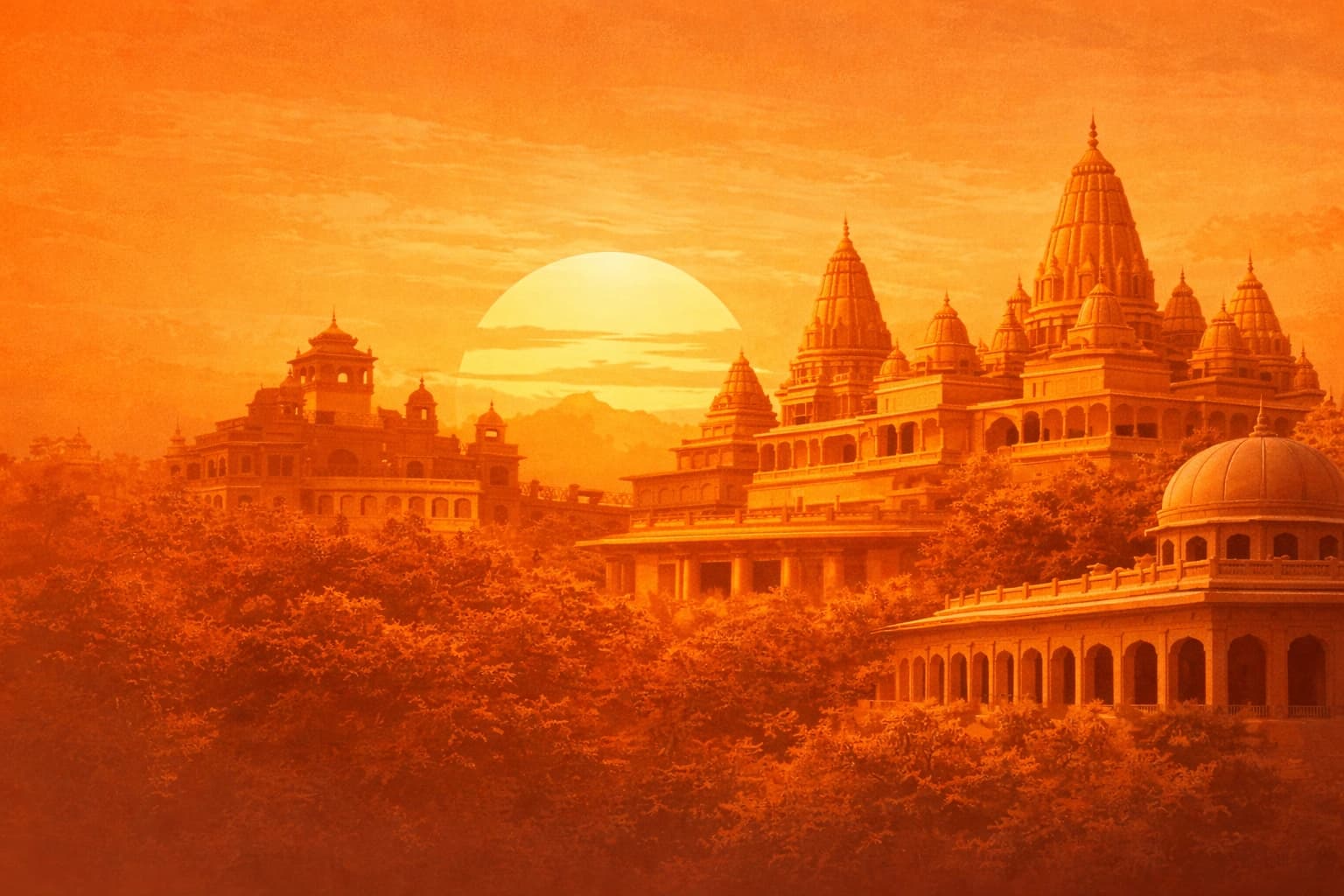
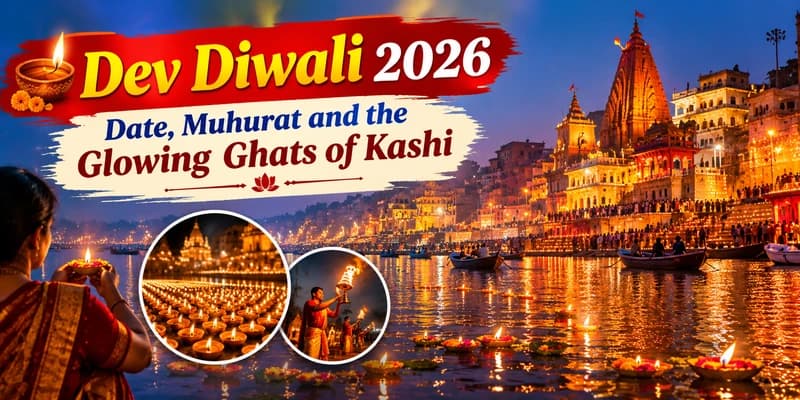
The name captures its meaning: by tradition, the gods themselves descend to Earth on this night to bathe in the sacred River Ganga and to celebrate the victory of light over darkness. To honour them, the people of Kashi illuminate all 84 of the city’s iconic riverfront ghats, stretching from Assi Ghat in the south to Raj Ghat and the newer Namo Ghat, with over a million earthen lamps. The result is a glowing architectural spectacle: the entire stone riverfront of Varanasi, tier upon tier, wrapped in flame and reflected in the river. It is at once a deeply sacred observance and a visually overwhelming community celebration, which is why it draws pilgrims and travellers from around the world. The sections below cover the exact 2026 date and muhurat, the legend behind the festival, the rituals, the best ghats and the practical tips to experience it well.
Dev Diwali 2026 date, tithi and muhurat
Dev Diwali 2026 falls on Tuesday, 24 November 2026. Because the core rituals, the Deep Daan (offering of lamps) and the Shiva puja, are performed after sunset during the Pradosh Kaal, the evening of the 24th is the focus. The key timings, as per the panchang, are:
Event | Timing (2026) |
Dev Diwali date | Tuesday, 24 November 2026 |
Kartik Purnima tithi begins | Monday, 23 November 2026, 11:42 PM |
Kartik Purnima tithi ends | Tuesday, 24 November 2026, 8:23 PM |
Pradosh Kaal Deep Daan muhurat | about 5:08 PM to 7:47 PM (24 November), roughly 2 hours 39 minutes |
Maha Ganga Aarti | typically begins about 5:30 PM, running to around 7:30 PM |
Please treat these as panchang-derived timings that can vary slightly between calendars and sources, so confirm with a local panchang and the ghat authorities nearer the date. The important practical point is that the magic is concentrated in the evening: the Deep Daan and the lighting of the lamps happen in and around the Pradosh Kaal (roughly 5:00 PM to 7:45 PM) and the grand Maha Ganga Aarti unfolds in the same window. So plan to be in position on your chosen ghat by the late afternoon, well before the lamps are lit, to witness the full transformation from dusk into the glowing night.
The legend: Shiva and Tripurasura
Dev Diwali is rooted in one of the great victory-legends of Hindu tradition, which is why it is also called Tripurotsav or Tripurari Purnima. By the mythology, three powerful demons, the Tripurasura brothers, conquered the three realms and built magnificent flying cities, together known as Tripura, the three cities. From these invincible aerial fortresses they caused absolute chaos, terrorising the universe and disturbing the balance of all creation.
Unable to defeat them, the gods pleaded with Lord Shiva to intervene. Shiva manifested in his fierce Tripurantaka form and destroyed the three demons and their three cities with a single divine arrow, restoring cosmic order, an act for which he earned the epithet Tripurari, the enemy of Tripura. In sheer joy and gratitude at this triumph of good over evil, the gods descended to the holy city of Kashi and lit millions of lamps along the banks of the Ganga to celebrate. This is the cosmic victory that Dev Diwali commemorates and it is why the festival joins the worship of Shiva (in whose city, Kashi, it is centred) with the descent of all the gods. These are cherished devotional and scriptural traditions, recounted here in that spirit and knowing the legend turns the sea of lamps into something far more moving than a light show.
Significance and key rituals
Dev Diwali balances rigorous ritual with breathtaking spectacle and several observances define the night and the day.
Kartik Snan. Many devotees wake during the Brahma Muhurta (pre-dawn) to take a holy dip in the Ganga, a purification ritual believed to wash away sins and grant spiritual merit, even moksha. The Kartik Snan is the devotional heart of the day.
Deep Daan. Devotees and pilgrims light and float tiny burning oil lamps (diyas) and offer flowers, onto the waters of the Ganga, honouring the deities, the ancestors and the sacred river itself. This is the signature act of Dev Diwali.
Illumination. Over a million earthen lamps turn the entire stone riverfront into a glowing spectacle, the image for which the festival is famous worldwide.
Grand Maha Ganga Aarti. The evening Ganga Aarti is elevated into a massive, synchronised ceremony, most grandly at Dashashwamedh Ghat, where high priests perform Vedic chants with large multi-tiered brass lamps in perfect unison.
Modern celebrations. Alongside the traditional lamps, the night sky over Varanasi fills with aerial fireworks, laser light shows and organised drone displays mapping out spiritual themes.
Together, these make Dev Diwali both a profound act of faith and a once-in-a-lifetime sight. If you can, take part rather than only watch: offer your own diya in Deep Daan and the night becomes personal.
The key ghats to experience
Varanasi has 84 ghats and all are lit, but a few offer especially memorable vantage points. Choose according to whether you want the grandest ceremony, the best photography, the deepest tradition or a calmer spot.
Dashashwamedh Ghat. The central hub of the festival and the site of the grandest, most elaborate Maha Ganga Aarti. It is the most spectacular and also the most densely crowded, so arrive very early for a place.
Assi Ghat. At the southern end, it offers excellent wide-angle views and photography and hosts vibrant cultural programmes and sub-rituals. A good choice for a slightly less crushed but still lively experience.
Panchganga Ghat. A deeply historical site, believed to be where five rivers meet, with special significance for its traditional hanging lantern structures, the Akash Deep (sky lamps). One for those drawn to the older, more esoteric tradition.
Chet Singh Ghat. Known for its stunning fort-palace backdrop and dramatic aesthetic lighting and generally less congested than the central ghats, a favourite for atmosphere and photographs away from the thickest crowds.
Whichever you choose, the illuminated, crescent-shaped riverfront is best appreciated as a whole, which is why a boat on the river (see the tips below) gives the finest panoramic view of all.
Essential travel and logistics tips
Varanasi becomes exceptionally crowded during Dev Diwali, so a little planning makes the difference between a stressful night and a sublime one.
Arrive early. Traffic restrictions are strictly enforced around the riverfront; vehicles are barred close to the ghats and you may have to walk 1 to 3 km. Plan to reach your chosen spot by about 3:30 PM to 4:30 PM to secure a good viewing area before the crowds and the lamp-lighting.
Book boats months ahead. Seeing the illuminated riverfront from the water gives the best panoramic view, but standard motorboats, luxury cruises and traditional bajras must be booked months in advance, demand is extreme and prices surge. Do not expect to arrange a boat on the day.
Comfort and safety. Wear comfortable, slip-resistant walking shoes and dress in light layers, late-November evenings in Varanasi turn cool. If you go on the river, always wear a registered life jacket and follow the boatmen’s and authorities’ instructions, as the river is crowded with vessels that night.
A couple more practical notes: keep your group together and agree a meeting point, since mobile networks can choke in the crowds; carry water and any medicines; and be patient with the slow-moving throngs. The crowds are part of the experience, a whole city and its visitors gathered in devotion, so build in time and let the evening unfold rather than racing between ghats.
Combining Dev Diwali with a Braj pilgrimage
Dev Diwali falls on Kartik Purnima, the climax of the holy month of Kartik, which is one of the most sacred and beautiful months across the whole of the Braj and wider Hindu calendar. If you are a devotee planning a wider Uttar Pradesh or North India pilgrimage, Dev Diwali in Kashi pairs beautifully with the Krishna land of Braj (Mathura and Vrindavan), where Kartik is celebrated with its own deep devotion; see our kartik month guide for what Kartik means in Braj.
Braj has its own luminous festival calendar around this season and through the year, from the lamps and parikrama of govardhan puja just after Diwali, to the moonlit sharad purnima a month before, to the world-famous colours of holi in spring. Late November, Dev Diwali time, is also simply a lovely, cool season to be in Braj; see our best time to visit guide. Kashi and Braj sit at opposite ends of Uttar Pradesh, so this is a planned multi-day pilgrimage rather than a day trip, but for devotees who want to honour both Shiva’s Kashi and Krishna’s Braj in one journey, it is a profound combination. A ready-made mathura vrindavan tour plan helps you fit the Braj leg around your Kashi dates.
Let a Brajwasi plan your visit
Dev Diwali in Kashi is unforgettable, but it rewards careful planning, the boats, the timing, the crowds and it combines wonderfully with a Braj pilgrimage for devotees doing a wider Uttar Pradesh journey. As Brajwasis running Experience My India, we can arrange the Braj (Mathura and Vrindavan) leg of your trip in full and help coordinate your Kashi Dev Diwali experience, advising on timing, ghats and the all-important early boat booking, so the two holy cities fit into one seamless pilgrimage. Our home ground is Braj, so that is where we guide you ourselves, with private transport, trusted local arrangements and a Brajwasi’s knowledge of the Krishna land. A shared Mathura and Vrindavan darshan starts from around 1,499 rupees per person; see our mathura vrindavan tour or we design a private Kashi-and-Braj pilgrimage around your Dev Diwali dates. Message us on WhatsApp at +91-7302265809 with your plans.
Related guides
Book Your Mathura - Vrindavan Trip Today
📞 +91-7302265809
💬 WhatsApp: +91-7302265809
We Reply in 30 Minutes
Packages start from ₹1,999/ person | Rated 4.5★ / 204+ Reviews
Explore all: Mathura Vrindavan Tour Packages
Jai Shri Krishna
Meet Gurudutt — Your Mathura Vrindavan Guide
Not just a tour operator — Gurudutt was born and raised in Braj Bhoomi. He has spent over a decade personally guiding pilgrims through the sacred lanes of Mathura & Vrindavan.
Founder – Experience My India
Gurudutt
Founder · Experience My India