Travel Guide · Festivals & Events · Updated August 2026
Diwali 2026 in India: Date, the 5 Days, Lakshmi Puja Muhurat and Diwali in Braj
By Gurudutt, Experience My India·12 August 2026
Quick Answer
Quick Enquiry
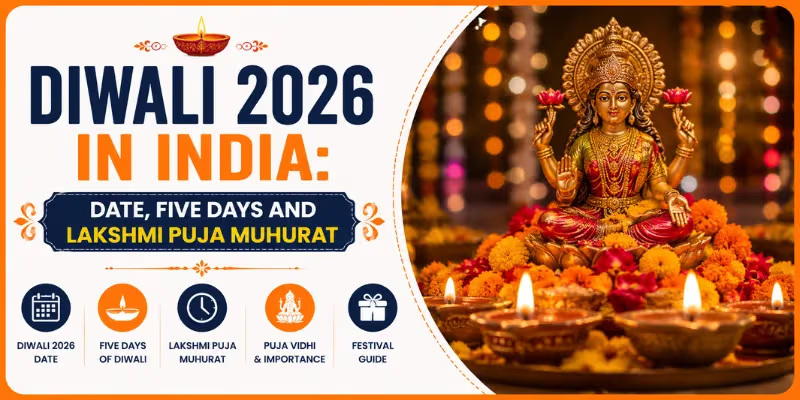
Diwali 2026: the 5-day calendar
Day | Festival | Date (2026) | What it marks |
Day 1 | Dhanteras | Fri, 6 Nov | Buying gold, silver and utensils; worship of Lord Dhanvantari and Lakshmi |
Day 2 | Naraka Chaturdashi / Choti Diwali | Sat 7 to Sun 8 Nov | Choti Diwali lamps on the 7th; the Naraka Chaturdashi morning bath on the 8th (the tithis overlap in 2026) |
Day 3 | Lakshmi Puja / Main Diwali | Sun, 8 Nov | The main day: Lakshmi and Ganesh puja, diyas, rangoli and fireworks |
(gap day) | Diwali Snan / Annakut preparation | Mon, 9 Nov | A quiet day between Diwali and Govardhan Puja in 2026 (Pratipada not yet begun at sunrise) |
Day 4 | Govardhan Puja / Annakut | Tue, 10 Nov | Worship of Krishna and Govardhan Hill; the Annakut offering (greatest in Braj) |
Day 5 | Bhai Dooj | Wed, 11 Nov | The bond of brothers and sisters (some regions keep it on 10 Nov) |
A note on the 2026 dates (please read). The main Diwali, Lakshmi Puja, on Sunday 8 November 2026, is settled everywhere, as the new moon falls at one instant worldwide. Two points matter for 2026. First, there is a one-day gap between Diwali and Govardhan Puja: because the Pratipada tithi does not begin until the afternoon of 9 November and is current at sunrise on the 10th, Govardhan Puja and the Annakut are kept on Tuesday, 10 November, with the 9th a quiet in-between day; and Bhai Dooj follows on 11 November. Second, Choti Diwali and the Naraka Chaturdashi bath straddle the 7th and 8th as those tithis overlap. The main Diwali date, 8 November, is the same in every panchang; for the surrounding days and the exact muhurat, which vary a little by region and city, follow the panchang your household uses.
When is Diwali 2026, and is it the 7th or 8th?
Diwali 2026 is on Sunday, 8 November 2026. This is the main day, Lakshmi Puja, kept on the night of Kartik Amavasya, the new moon, which falls at a single instant worldwide, so 8 November is the Diwali date across India and abroad alike. You may see the 7th mentioned too; this is because Choti Diwali, the small Diwali, is kept on the evening of the 7th in many places, while the Naraka Chaturdashi morning bath falls on the 8th in 2026, together with the main Diwali, as the tithis overlap. So for the great day of lights and Lakshmi Puja, the date is Sunday, 8 November. For Krishna's Braj, the festival is especially dear, and a mathura vrindavan tour package with Experience My India can bring you to Vrindavan and Mathura for Diwali and the great Govardhan Puja.
From the ground (Gurudutt): Diwali in Braj is a wonder; the whole of Vrindavan and Mathura glows with diyas, the temples are dressed in light, and lamps float on the Yamuna. And this year, after a quiet day, comes our great Govardhan Puja on the 10th, when we worship Giriraj ji and offer the Annakut, the mountain of food, a festival as dear to Braj as any in the year. I always tell my guests the true dates, for here the Govardhan Puja is the tenth, not the ninth. Come and see the festival of lights in the land of Krishna. Radhe Radhe, Jai Giriraj.
The five days of Diwali 2026, and the Govardhan Puja gap
Diwali is the central day of a five-day festival, each day with its own meaning; note the one-day gap before Govardhan Puja in 2026:
Dhanteras, Friday 6 November. The first day, dear to Lord Dhanvantari and to Lakshmi; it is auspicious to buy gold, silver, utensils and new things, and homes are cleaned and the first preparations made for Diwali.
Naraka Chaturdashi, Choti Diwali, Saturday 7 to Sunday 8 November. The small Diwali; by tradition it marks Krishna's victory over the demon Narakasura, and is kept with an early-morning ritual bath, the abhyanga snan, and the first lamps. In 2026, Choti Diwali lamps are lit on the evening of the 7th, and the Naraka Chaturdashi snan falls on the morning of the 8th, together with the main Diwali, as the tithis overlap.
Lakshmi Puja, main Diwali, Sunday 8 November. The great day of lights: in the evening, during Pradosh Kaal, families perform the Lakshmi and Ganesh puja, light rows of diyas, draw rangoli, open their doors to welcome Lakshmi, and set off fireworks; it is the heart of the festival.
The gap day, Monday 9 November. In 2026 there is a one-day gap between Diwali and Govardhan Puja, because the Pratipada tithi does not begin until the afternoon of the 9th; the 9th is a quiet in-between day, kept in some traditions as Diwali Snan or as preparation for the Annakut, with no major festival of its own.
Govardhan Puja and Annakut, Tuesday 10 November. The fourth day, one of the greatest festivals of Braj, kept on the morning of the 10th while the Pratipada is current: in memory of Krishna lifting Govardhan Hill, devotees worship Giriraj and offer the Annakut, a great mountain of many dishes, to the Lord; in Braj and its temples this is magnificent.
Bhai Dooj, Wednesday 11 November. The fifth day, celebrating the bond of brothers and sisters, when sisters pray for their brothers' long life and apply the tilak, akin to Raksha Bandhan; some regions keep it on the 10th.
The Govardhan Puja itself is done in the morning, in the Pratahkala muhurat, roughly from around 6:40 to 8:50 in the morning by the North India panchang, while the Pratipada tithi is current; as with all muhurats, confirm the exact time for your city locally.
The Lakshmi Puja muhurat 2026
The Lakshmi Puja on the evening of 8 November 2026 is performed during Pradosh Kaal, the auspicious time just after sunset, when Amavasya is prevailing. The muhurat window falls in the evening, generally between about 6 pm and 8:30 pm, but it is calculated from your city's sunset, so it differs from place to place, for example beginning a little before 6 pm in Delhi and a little after in cities further east or south. So treat the evening as the time, but take the exact Lakshmi Puja muhurat for your own city from the panchang your household follows, or from your priest, to perform the puja at the most auspicious moment. The simple, devout welcoming of Lakshmi with a clean home, diyas and a loving heart is the essence, within the evening window.
What Diwali means
Diwali, Deepavali, the row of lights, is the great festival of the victory of light over darkness and good over evil, dear across India and the world:
The return of Lord Rama. Diwali celebrates, above all, the return of Lord Rama to Ayodhya after fourteen years of exile and his victory over Ravana, when the people lit rows of lamps to welcome him home; so the lamps of Diwali are the light of joy and righteousness returning.
The worship of Lakshmi. Diwali is the great day of Lakshmi, the goddess of prosperity and fortune, who is welcomed into clean, lamp-lit homes on the night of the new moon; the Lakshmi Puja is the heart of the festival, with Ganesha, the remover of obstacles, worshipped alongside her.
Light over darkness. Above all, Diwali is the festival of light over darkness, knowledge over ignorance, and good over evil; the diyas, the fireworks and the joy carry one message, that light and goodness prevail. It is a festival of family, sweets, new clothes and shared delight.
Diwali in Braj: Vrindavan, Mathura and Govardhan Puja
In Krishna's Braj, Diwali is especially beautiful and deeply dear, above all for the Govardhan Puja that follows:
Diwali in Vrindavan and Mathura. At Diwali, the whole of Vrindavan and Mathura glows; the great temples, the Banke Bihari temple, the Prem Mandir with its lights, the Dwarkadhish temple and the Krishna Janmabhoomi, are dressed in diyas and lamps, and the Yamuna ghats glow with floating lights; it is a magical time to be in the land of Krishna.
Govardhan Puja and the Annakut, 10 November. Govardhan Puja, on 10 November 2026 in Braj, is one of the greatest festivals of the region. In memory of the young Krishna lifting Govardhan Hill on his little finger to shelter Braj, devotees worship Giriraj, make a small Govardhan of cow dung or food, and offer the Annakut, a great mountain of many dishes, to the Lord; at Govardhan and in the temples of Braj the Annakut is a magnificent sight.
The parikrama and the temples. Many pilgrims do the Govardhan parikrama at this time, and the temples of Braj keep the Govardhan Puja and Annakut with the greatest devotion; for Braj, these days around Diwali and Govardhan Puja are among the most beautiful and auspicious of the whole year.
See our govardhan hill page for Giriraj and the parikrama, the giriraj maharaj govardhan aarti lyrics for the aarti sung to him, and the prem mandir vrindavan and banke bihari temple, beautiful at Diwali.
Visiting Braj for Diwali and Govardhan Puja
Diwali and Govardhan Puja are a wonderful time to visit Krishna's Braj:
When to come. Come for Diwali on 8 November and, above all, the Govardhan Puja and Annakut on 10 November 2026; a few days spanning these let you see the lamp-lit temples of Vrindavan and Mathura, the Annakut, and the Govardhan parikrama, with the quiet 9th in between. Book early, as Diwali and Govardhan Puja are a busy, dear season in Braj.
The Annakut darshan. To see the Annakut, the great mountain of food offered to the Lord, in the temples of Braj and at Govardhan on 10 November, is an unforgettable sight; the temples are at their most beautiful, dressed in light and heaped with the Annakut, in these days.
Go with a local. Diwali and Govardhan Puja bring crowds and busy roads; go with a Braj local who knows the temples, the Annakut darshans, the Govardhan parikrama and the safe, easy way, and who knows the true local dates, the Govardhan Puja here being the 10th.
See the dwarkadhish temple and krishna janmabhoomi of Mathura, the braj yamuna ghats and leela sites, and our how to commute in vrindavan guide for getting around.
We host guests for Diwali and the Govardhan Puja and Annakut in Braj every year, with a comfortable vehicle, the temple darshans and the Govardhan parikrama arranged, and a Braj-born host who welcomes you as family and knows the true dates. A shared day tour starts from around ₹1,499 per person, with darshan free, and we arrange bespoke Diwali and Govardhan Puja trips too. The braj 84 kos yatra covers the whole of Braj including Govardhan, our mathura vrindavan tour the twin cities, and our vrindavan tour package Vrindavan in a day; our mathura vrindavan tour itinerary helps you plan. Message me on WhatsApp at +91-7302265809 to plan your Diwali in Braj, and book early.
How Diwali is celebrated, and planning tips
Wherever you are, Diwali is kept with light, worship and joy:
Cleaning, lights and rangoli. In the days before, homes are cleaned and decorated; on Diwali, rows of diyas and lights are lit, rangoli is drawn at the doorstep, and doors and windows are opened to welcome Lakshmi, that fortune and light may enter.
The Lakshmi Puja and sweets. In the evening, the Lakshmi and Ganesh puja is performed during the muhurat; families share sweets and new clothes, give gifts, and enjoy fireworks, in a festival of togetherness and joy. In Braj, the Govardhan Puja and Annakut follow on 10 November.
Planning tips. If you travel for Diwali, especially to Braj, book your stay and travel early, as it is a busy season; confirm the Lakshmi Puja muhurat for your city, and note the Govardhan Puja date, the 10th in 2026; celebrate safely with lamps and fireworks, taking care with children; and give the festival the time and devotion it deserves.
Related guides
Meet Gurudutt — Your Mathura Vrindavan Guide
Not just a tour operator — Gurudutt was born and raised in Braj Bhoomi. He has spent over a decade personally guiding pilgrims through the sacred lanes of Mathura & Vrindavan.
Founder – Experience My India
Gurudutt
Founder · Experience My India