Travel Guide · Festivals & Events · Updated November 2026
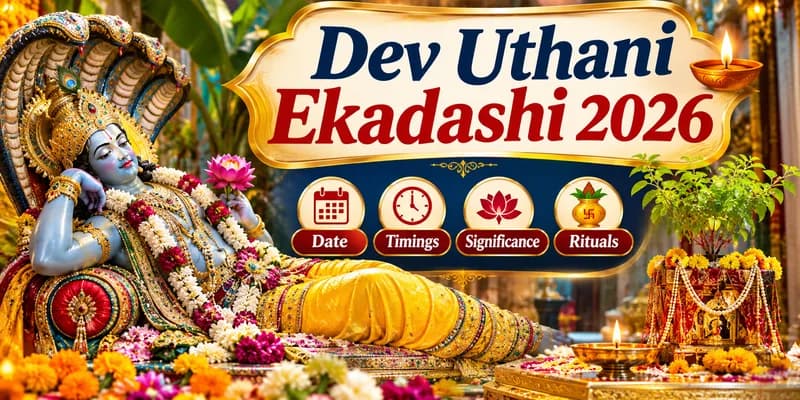
Dev Uthani Ekadashi 2026: Date, Timings, Significance and Rituals
By Gurudutt, Experience My India·12 November 2026
Quick Answer
Quick Enquiry
Dev Uthani Ekadashi is a joyful turning point in Braj. For four months of Chaturmas the big ceremonies pause and on this day, by tradition, the Lord wakes and the wedding season begins again. In our homes we draw the Lord’s footprints, light ghee lamps, often placed under a sieve overnight, offer fresh sugarcane and water chestnuts and sing to wake him and in the evening comes Tulsi Vivah, the marriage of Tulsi Maharani to the Lord. The temples of Vrindavan are beautifully lit and full of kirtan. If you are in Braj for Kartik, this is a day not to miss. We can time your darshan at Banke Bihari and the other temples for it. Radhe Radhe. See our Mathura Vrindavan tour Packages or message WhatsApp +91 7302265809.
What is Dev Uthani Ekadashi?
Dev Uthani Ekadashi is one of the most significant Ekadashis of the Hindu year. It falls on Kartik Shukla Ekadashi, the eleventh day of the bright fortnight of the holy month of Kartik and marks the day Lord Vishnu awakens from his four-month cosmic sleep known as Chaturmas. The festival is known by several names: Prabodhini Ekadashi (Prabodhini meaning “awakening”), Devutthana or Dev Uthani Ekadashi (Utthana meaning “rising”) and it signifies the return of cosmic energy, auspiciousness and spiritual renewal.
Because it falls in the sacred month of Kartik, Dev Uthani Ekadashi is especially meaningful in Braj; for the wider month, see our kartik guide. For devotees, it is both a day of fasting and worship (the Ekadashi vrat) and a joyful festival, the awakening of the Lord, the start of Tulsi Vivah and the reopening of the auspicious season after the long pause of Chaturmas.
Dates and timings for 2026
Ekadashi observances can fall on two days, as the Smarta and Vaishnava traditions follow slightly different rules. Here are the 2026 timings; festival and tithi timings follow the Hindu lunar calendar and vary by location, so treat these as the expected panchang timings and reconfirm locally.
Smarta observance: Friday, 20 November 2026.
Vaishnava (Gauna) observance: Saturday, 21 November 2026.
Ekadashi tithi begins: 7:15 AM on 20 November 2026 (IST).
Ekadashi tithi ends: 6:31 AM on 21 November 2026 (IST).
Parana (breaking the fast), for New Delhi: the Smarta parana on 21 November is about 1:11 PM to 3:18 PM; the Vaishnava parana on 22 November is about 6:49 AM to 8:56 AM. Parana timings vary by city, so check for your location.
Tulsi Vivah: Saturday, 21 November 2026, typically celebrated in the evening.
If you are observing the vrat, note which tradition you follow (Smarta or Vaishnava) to pick the right fasting and parana day and confirm the exact parana window for your city, since the fast is traditionally broken within the stated window on the day after the Ekadashi.
History and mythology
The story of Dev Uthani Ekadashi is one of the great cosmic rhythms of the Hindu calendar and is recounted here as cherished scriptural tradition, drawn from texts such as the Skanda Purana.
By tradition, Lord Vishnu enters a deep meditative sleep (Yoga Nidra) on Devshayani Ekadashi, which falls in the month of Ashada (around June or July). This begins the four-month period known as Chaturmas, during which the Lord is said to rest. Four months later, on Kartik Shukla Ekadashi, Vishnu awakens and this day of awakening is Dev Uthani Ekadashi. His waking signifies the return of cosmic energy, auspiciousness and spiritual renewal to the world.
The names of the festival capture this beautifully: Prabodhini means “awakening” and Utthana means “rising”, so Dev Uthani Ekadashi is, quite literally, the day of the Lord’s rising. With his awakening, the auspicious energies that were held in abeyance through Chaturmas return and the world resumes its ceremonies and celebrations. These are cherished devotional and scriptural traditions.
Significance
Dev Uthani Ekadashi carries several layers of significance, which is why it is so widely and joyfully observed.
The resumption of auspicious events. During the four months of Chaturmas, many auspicious ceremonies, weddings, housewarmings (Griha Pravesh) and the starting of new business ventures, are traditionally paused. Dev Uthani Ekadashi officially reopens this auspicious season: from this day, the wedding and ceremonial calendar resumes, which is why it is so eagerly awaited each year.
Tulsi Vivah. The day features Tulsi Vivah, the ceremonial marriage of the sacred Tulsi plant to Shaligram (a sacred stone form of Vishnu) or to Lord Krishna. This beautiful ritual symbolises the start of the wedding season and is cherished in homes and temples across Braj and beyond.
The spiritual merit of the vrat. Observing the Ekadashi fast on this day is held to purify the mind and soul. By tradition, the vrat is said to help control the eleven senses (the five senses of knowledge, the five of action and the mind) and is believed to grant great spiritual merit, even Moksha (liberation). These are cherished devotional beliefs and the vrat is undertaken as an act of devotion and self-discipline.
Together, the awakening of the Lord, the start of Tulsi Vivah and the reopening of the auspicious season make Dev Uthani Ekadashi one of the most uplifting days in the Kartik calendar.
Key rituals
The rituals of Dev Uthani Ekadashi are tender and symbolic, centred on waking the Lord and honouring Tulsi.
Symbolically waking the Lord. Devotees draw the footprints of Lord Vishnu inside or just outside the home, as a sign of welcoming him as he rises. Ghee lamps are lit, often placed under a perforated bowl or sieve overnight and devotees sing devotional bhajans or chant the Hare Krishna Mahamantra to wake the Lord symbolically. In some homes the family gently calls the Lord to rise at the auspicious time.
Offerings. Fresh seasonal produce is offered, in particular sugarcane (ganna), water chestnuts (singhara) and sweets, along with fruits, offered to Lord Vishnu and to Tulsi. The fresh sugarcane of the season is a signature offering of the day.
Tulsi Vivah. In the evening, the sacred Tulsi plant is ceremonially married to Shaligram or to a form of Krishna, with the Tulsi pot decorated like a bride, lamps and the chanting of marriage mantras, a joyful, intimate ceremony in homes and temples.
Temple celebrations. The major temples, especially in Braj, hold special darshans, kirtans and illumination drives for the day. The temples of Vrindavan and Mathura, such as banke bihari and iskcon vrindavan, are beautifully lit and filled with devotional singing. For the aartis of the region, see our must-attend aarti guide.
Taking part in even a little of this, lighting a lamp, offering sugarcane or witnessing a Tulsi Vivah, is a moving way to join the day’s devotion.
Dev Uthani Ekadashi in Vrindavan and Braj
Braj is one of the most beautiful places to experience Dev Uthani Ekadashi, because the whole region is already alive with the devotion of Kartik. On the day, the temples of Vrindavan and Mathura hold special darshans and kirtans and are illuminated with lamps and lights, the atmosphere is festive and deeply devotional.
Alongside the great temples like radha raman, prem mandir and nidhivan, the Yamuna ghats are a special place to be during Kartik, with the daily Deep Daan lamp offerings at dusk; see our braj yamuna ghats guide. Many pilgrims also walk the vrindavan parikrama during this time. Dev Uthani Ekadashi sits within a rich sequence of Kartik observances in Braj and comes close to other great days of the month, see our govardhan puja guide for another Kartik highlight. For the full temple circuit, see our places to visit in vrindavan guide.
How to experience it and plan your visit
The best way to experience Dev Uthani Ekadashi in Braj is to be in Vrindavan or Mathura for the day, join the temple darshans and kirtans, witness a Tulsi Vivah in the evening, and, if you wish, observe the Ekadashi vrat. For arriving in the region, see our how to reach vrindavan guide and for the best overall season, our best time to visit guide (mid-November, in Kartik, is a lovely, cool time to be in Braj).
Because Dev Uthani Ekadashi falls in peak Kartik, the town is busy, so book your stay well ahead and plan an early start for darshan. A ready-made mathura vrindavan tour plan helps you fit the day into a fuller Braj pilgrimage, with the temples, the ghats and the Kartik atmosphere. A local host can time your temple visits around the special darshans and the crowds, which makes the day far smoother.
Let a Brajwasi plan your visit
Dev Uthani Ekadashi is one of the most uplifting days of Kartik in Braj, the temples lit and full of kirtan, the evening Tulsi Vivah and the whole region joyful at the Lord’s awakening. As Brajwasis running Experience My India, we can plan your visit around it: time your darshan at Banke Bihari, ISKCON, Radha Raman and the other temples for the special celebrations, take you to the Yamuna ghats for the Kartik Deep Daan, help you witness a Tulsi Vivah and arrange your stay and transport around the festival crowds. We can build it into a complete Kartik-season Braj pilgrimage. A shared Mathura and Vrindavan darshan starts from around 1,499 rupees per person; see our mathura vrindavan tour. Message us on WhatsApp at +91-7302265809 and we will plan your Dev Uthani Ekadashi in Braj. Radhe Radhe.
Related guides
Book Your Mathura - Vrindavan Trip Today
📞 +91-7302265809
💬 WhatsApp: +91-7302265809
We Reply in 30 Minutes
Packages start from ₹1,999/ person | Rated 4.5★ / 204+ Reviews
Explore all: Mathura Vrindavan Tour Packages
Jai Shri Krishna
Meet Gurudutt — Your Mathura Vrindavan Guide
Not just a tour operator — Gurudutt was born and raised in Braj Bhoomi. He has spent over a decade personally guiding pilgrims through the sacred lanes of Mathura & Vrindavan.
Founder – Experience My India
Gurudutt
Founder · Experience My India