Travel Guide · Travel Guides · Updated October 2026
The Widows of Vrindavan: History and How to Help
By Gurudutt, Experience My India·23 October 2026
Quick Answer
Quick Enquiry
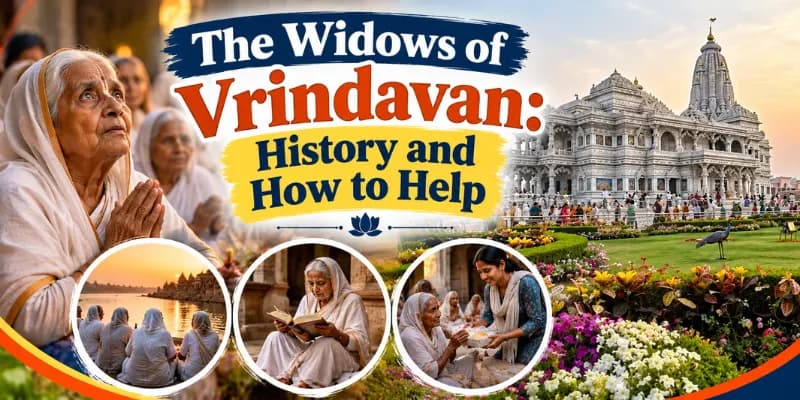
Vrindavan is revered as the land of Krishna, the symbol of divine love and for generations that drew India’s most abandoned women to it. Cast out or left destitute after their husbands died, thousands of Hindu widows migrated to Vrindavan for spiritual refuge and the company of others sharing the same fate. So many came and stayed, that the town earned the sorrowful name the City of Widows. Estimates of their number vary and are hard to fix, but they have long numbered in the thousands, enough that the white-clad widow became one of Vrindavan’s most visible and most heartbreaking, figures.
Historically they survived on the margins: begging or singing bhajans (devotional songs) for hours in the temples in exchange for a few rupees or a handful of rice. Their presence in the land of Krishna was both a spiritual choice and a last resort, a place to grieve, to pray and simply to survive. See our Mathura Vrindavan tour Packages or message WhatsApp +91 7302265809.
The history and root causes
The marginalisation of widows in India is tied to deep historical, patriarchal and economic factors. Understanding them is the first step to helping with dignity rather than pity.
Social ostracisation
In orthodox, conservative tradition, a woman’s identity was historically bound to her husband’s. On his death, a widow was frequently viewed as inauspicious, even blamed for his demise and barred from community celebrations and from wearing bright colours. Mandated into white and a life of renunciation, she was pushed to the edges of the very community she belonged to.
Economic abandonment
Many widows are thrown out or forced to flee by their in-laws. Driven by property disputes or simply an unwillingness to support an ageing relative, families abandon these women, stripping them of their financial security and their home. With no income and no shelter, migration to a holy town became, for many, the only option left.
Devotional refuge
Left with no means of survival, thousands travelled to Vrindavan, turning to Lord Krishna and to a community of women who understood their plight. There they found spiritual solace and a kind of belonging, even as they survived by begging or by singing bhajans in the temples for a pittance. For centuries this was the pattern: abandonment at home, refuge in the dham.
The landmark legal reform
The plight of Vrindavan’s widows shifted significantly after 2012, when the Supreme Court of India intervened over their pitiable living conditions. The court directed government bodies and legal organisations to create action plans, collect data and clean up the state-run ashrams, and crucially, it appointed Sulabh International, a prominent social-reform NGO, to oversee their welfare.
That intervention led to direct stipends, improved healthcare and a monumental cultural shift. Breaking a centuries-old taboo, the widows celebrated Widow Holi for the first time in 2013, reclaiming their right to joy, music and vibrant colour. It remains one of the most moving symbols of reform in modern India, a day when women denied colour for a lifetime finally threw it to the sky.
Daily life in the ashrams today
For many of Vrindavan’s widows, daily life still revolves around the bhajan ashrams and care homes and understanding that rhythm helps a visitor see them as people rather than a cause. A large number are elderly and their days are shaped by devotion: gathering to sing bhajans, attending temple, sharing simple communal meals and keeping the company of other women who understand their path. In the better-run homes this now comes with a roof that does not leak, clean washrooms, regular food and some medical attention, comforts that were far from guaranteed a generation ago.
The texture of that life is a mix of hardship and genuine grace. There is real loneliness, grief and economic worry and the ashrams can be crowded. Yet there is also community, routine and faith and many of the women carry themselves with striking dignity and even humour. Some have been in Vrindavan for decades and consider it home; others arrived more recently. A respectful visitor does best to approach quietly, to listen rather than pity and to remember that each white-clad figure is an individual with a long story, not a symbol. Seeing that ordinary, resilient daily life is part of understanding why dignity, not charity alone, is the right lens.
Awareness and how the story reached wider attention
The condition of India’s widows, long hidden in plain sight, gradually drew national and international attention through the work of journalists, photographers, social workers and film-makers over several decades. The broader plight was brought to global audiences by works such as the acclaimed 2005 film Water, which dramatised the lives of Hindu widows in a holy city and by sustained reporting on the ashrams of Vrindavan. This slow build of awareness helped create the public pressure and the data that eventually reached the courts.
Awareness, handled well, has been a force for good here: it brought funding, scrutiny of neglectful institutions and the reforms that followed 2012. Handled badly, though, attention can slide into spectacle, treating vulnerable women as photo opportunities rather than citizens. That tension is exactly why this page stresses dignity so strongly. The goal of telling the story is not to generate pity or clicks, but to channel genuine attention into verified support and respectful conduct. If learning about the widows of Vrindavan moves you, the most useful response is quiet, practical and ongoing: give to trustworthy organisations, share accurate information and treat the women themselves with the privacy and respect any person deserves.
The road ahead: what still needs doing
Reform since 2012 has genuinely improved many lives, but it is unfinished work and being honest about that matters. Economic precarity remains the hardest problem: stipends and ashram places do not reach everyone and many women still have little independent income. Securing identity documents, bank accounts and pensions is slow, bureaucratic work and without papers a woman can be locked out of the very benefits meant for her. Healthcare, especially for an ageing population, is stretched and crowded housing is still common.
The most durable solutions point in the same direction: not just shelter and food, but documentation, healthcare and where possible, skills and income that restore independence and choice. Grassroots organisations doing this patient work, helping a woman get her Aadhaar and pension, teaching literacy or a trade, running a clean and humane home, are where outside support makes the most lasting difference. Progress here is measured less in dramatic moments than in quiet gains: one more woman with her papers in order, one more home properly funded, one more widow earning a fair wage. Keeping attention and support flowing toward that steady work is the real task ahead.
How you can help
Conditions have improved, but systemic challenges remain, economic precarity, crowded ashrams and gaps in healthcare. Here are respectful, practical ways to make a real difference. Always verify an organisation before you give.
Support verified grassroots NGOs
Several organisations work on the ground to move these women from invisible outcasts to recognised citizens with dignity. Maitri India, through its MaitriGhar ashrams, provides holistic rehabilitation, nutritious meals and mental-health counselling and helps widows obtain the identity documents they need to access state pensions and open bank accounts. RadhaSeva, in the nearby holy area of Radha Kund, provides daily wholesome meals, secure housing with private rooms and essential medical care. Sulabh International manages multiple care homes, providing monthly cash stipends, nutritional support and medical care to ageing residents. Before donating to any of these or any other group, verify its registration and credentials and prefer giving to established organisations rather than to individuals on the street, which can perpetuate begging.
Fund vocational and literacy programmes
Donating to education helps younger and able-bodied widows break the cycle of dependency. Organisations train the women in Hindi, Bengali and English literacy, alongside textile, stitching and handicraft production, so they can earn fair wages and build autonomy. This kind of support, which creates income and self-reliance, is among the most lasting ways to help, because it restores not just survival but independence.
Practise respectful awareness and tourism
If you visit Vrindavan, especially during the annual Widow Holi celebrations, remember that this is a deeply therapeutic, emotional space for trauma survivors, not a tourist spectacle. Always seek consent before taking photos. Dress modestly and respect their private living quarters. If you take part in Holi, use only gentle, organic or skin-friendly herbal colours. Witnessing with respect and leaving your support with the organisations that care for them, is the kindest way to be present.
A note on visiting respectfully
If your travels bring you to Vrindavan and especially if you hope to witness Widow Holi at the gopinath temple, we are glad to help you do so with care, arriving at the right time, dressed modestly, photographing only with consent and keeping clear of the residents’ private spaces, so you are a respectful guest rather than an intrusion. We will also gladly point you toward the verified organisations above if you wish to give or volunteer. This is not a tour to sell; it is a part of Braj we think deserves to be seen and helped, with dignity. You can reach us on WhatsApp at +91-7302265809.
Related guides
Book Your Mathura - Vrindavan Trip Today
📞 +91-7302265809
💬 WhatsApp: +91-7302265809
We Reply in 30 Minutes
Packages start from ₹1,999/ person | Rated 4.5★ / 204+ Reviews
Explore all: Mathura Vrindavan Tour Packages
Jai Shri Krishna
Start with these
Related guides
Meet Gurudutt — Your Mathura Vrindavan Guide
Not just a tour operator — Gurudutt was born and raised in Braj Bhoomi. He has spent over a decade personally guiding pilgrims through the sacred lanes of Mathura & Vrindavan.
Founder – Experience My India
Gurudutt
Founder · Experience My India