How far is Dauji from Mathura and nearby places?
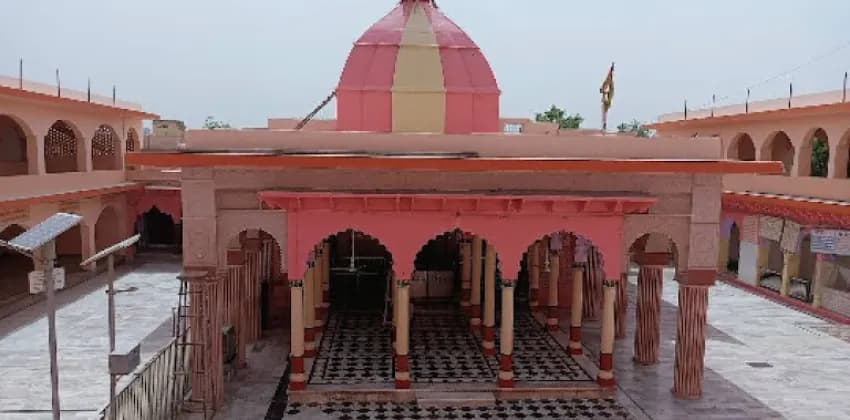
Dau Ji Temple is about 20 km from Mathura, roughly a 40 minute drive southeast across the Yamuna, and it sits close to Gokul, which is why the two pair naturally into one half-day. Although the temple is often searched as “Dauji temple Vrindavan,” it is not in Vrindavan itself; it stands at Baldeo, about 28 km from Vrindavan, and about 10 km east of Gokul rather than inside Gokul town. The distances below answer the most common planning question for this temple.
From | Distance (about) | Travel time (about) |
Mathura city and Krishna Janmabhoomi | 20 km | 40 minutes by car |
Mathura Junction railway station | 20 km | 40 minutes |
Gokul | 10 km | 20 to 25 minutes |
Mahavan | 7 km | 15 minutes |
Raman Reti (Gokul) | 10 km | 20 to 25 minutes |
Vrindavan | 28 km | 50 to 60 minutes |
Govardhan | 32 km | About 1 hour |
Barsana | About 50 km | About 1.5 hours |
Agra | 60 km | About 1.5 hours |
Delhi (via Yamuna Expressway) | 160 km | 3 to 3.5 hours |
Because Baldeo lies beyond the immediate Mathura Vrindavan circuit, the smart way to visit is to fold it into a Gokul day: Gokul, Mahavan and Raman Reti sit in the same belt east of the Yamuna, so one unhurried half-day covers Krishna's infancy sites and his elder brother's shrine together.
How to reach Dau Ji Mandir, Baldeo
Baldeo is reached by road from Mathura in about 40 minutes, and there is no separate rail or air head for the town itself, so Mathura is the arrival point for every route.
• From Mathura: about 20 km by cab, auto or bus, roughly 40 minutes across the Yamuna toward the southeast.
• From Gokul or Mahavan: close by, about 10 km, which is why Dauji pairs with a Gokul visit.
• By train: Mathura Junction is the nearest major station, about 20 km away, then continue by road.
• From Delhi or Noida: take the Yamuna Expressway to Mathura, about 160 km and 3 to 3.5 hours, then drive on to Baldeo.
• From Agra: about 60 km via the expressway corridor to Mathura, then Baldeo.
Baldeo is off the standard loop. A guided car makes a Gokul and Dauji day simple and unhurried. See our Mathura Vrindavan tour packages or message +91 7302265809 on WhatsApp.
Who is Dauji, and what does the name mean?
Dauji is Balarama, Krishna's elder brother, and the name means “elder brother” in the Braj tongue, the affectionate, respectful way Brajwasis speak of him. Balarama, also called Baldev, Balabhadra and Dau, is held to be the incarnation of Sheshnaga, the cosmic serpent, and he bears the plough, the emblem of the soil, of farming and of a strength rooted in the earth. Where Krishna is the flute and the dance, Balarama is the plough and the firm ground beneath it. In Braj he slew the demon Dhenukasura and, as a child, played beside Krishna in the silver sands of Raman Reti. He is also called Sankarshana, “the one drawn across,” because his embryo was drawn from Devaki's womb to Rohini's, so that he was born to her. Baldeo town itself is named for Baldev, and it lives entirely around its Dauji Maharaj.
The deity, the gates and Balbhadra Kund
The Dauji temple holds a large black stone murti of Balarama, about 7 feet tall and said to be the largest Balarama idol in all of Braj Mandal, adorned with fine jewellery and a carved crown, standing beside his consort Revati. The temple has several grand gates, among them Singhchaur, Janani Deodhi and the Goshala Dwar, the “big doors,” and a busy market coils through the lanes around it. Behind the temple lies the sacred tank Balbhadra Kund, known as Kshir Sagar, the ocean of milk, ringed by stone ghats always full of water. Many pilgrims take darshan of the kund, and by tradition bathe or purify themselves there, before entering for the deity's darshan. The idol and the kund together are the spiritual heart of Baldeo.
Huranga: the wild Holi of Dauji
If you want the rawest fun in Braj, come for Huranga, the Holi played at Dauji the day after the main festival. Here the women of Baldeo drench the men in colour and “beat” them with koda, whips twisted from wet, torn cloth, while the men sing, tease and take it in good humour. It is soaking, raucous and genuinely rough in the crush, and it belongs to Braj's great Holi cycle alongside the Lathmar Holi of Barsana and Nandgaon and the flower Holi at Banke Bihari. Huranga falls the day after Holi, so the date moves each year with the lunar calendar; in 2026 it fell on 5 March, and in 2027 it falls on 23 March. If you plan to join rather than watch, wear clothes you are happy to ruin, keep valuables off you entirely, and protect or leave your phone, because you will be coloured head to toe. It is not for the elderly, the frail or small children.
Baldev Chhath (Hal Shashthi): Balarama's appearance day
Dauji is the seat of Baldev Chhath, also called Hal Shashthi, Balarama's appearance day, kept on Bhadrapada Krishna Shashthi, about two days before Janmashtami, which falls in early September in 2026. On this day mothers traditionally fast for the wellbeing and long life of their sons, and Baldeo fills with quiet devotion. It is the gentle, devotional counterpart to Huranga's chaos. Elsewhere in India, Balarama Jayanti is kept on Shravana Purnima, so traditions differ, which is why the Braj observance is named precisely. As with all festivals here, the date is tithi-based and moves yearly, so confirm the current year's date before planning around it.
Entry, dress code and photography
Entry to Dau Ji Temple is free, and there is no ticket for darshan; your only costs are travel, food and stay. Dress modestly, and remove footwear before entering. Photography of the deity is generally not permitted, so always ask before raising a phone and respect the temple's rule. During Huranga, expect to be soaked and coloured, so wear clothes you do not mind ruining, seal your phone in a bag or leave it behind, and keep valuables off your person entirely. Direct any generosity to the temple hundi or a genuine gaushala rather than to anyone in the lanes who pressures you for a paid ritual.
Charkula, Mukhrai and what to combine nearby
A detail almost no outside guide knows: the nearby village of Mukhrai is the home of the Charkula dance, in which a woman balances a towering, multi-tiered, lit lamp-stand on her head and dances, performed around the spring festivals. It is one of Braj's most striking sights if your visit aligns with the season. Dauji sits in the Gokul, Mahavan and Raman Reti belt, so the natural pairing is a Gokul day: Gokul and Mahavan, where Krishna was raised in hiding; Raman Reti, the silver sands where the brothers played; and, on the way, Krishna Janmabhoomi in Mathura. To see where Balarama is worshipped beside Krishna back in Vrindavan, visit ISKCON's Krishna Balaram Mandir. Browse everything at the Famous Temples of Mathura and Vrindavan hub.
Food and prasad near Dauji
Baldeo is a small Braj town, so eat simply and well at the busiest, freshly cooking stalls: kachori and jalebi, peda, and lassi in a clay kulhad. Favour the counters with the biggest queues for freshness, drink only sealed bottled water since small-town water will not suit a traveller, and carry your own water for the drive out and back.
Gurudutt's tips: what only a local knows
After years of bringing pilgrims to Baldeo, here is what I tell every group. Make your Braj whole by meeting Dau; most people miss Balarama entirely, and the elder brother is half the leela. Pair Dauji with Gokul, because they sit in the same belt east of the Yamuna and one calm half-day does both. If you are near in the spring season, seek the Charkula lamp-dance at Mukhrai, which almost no outside visitor ever sees. Come for Huranga only if you want raw spectacle and are ready to be soaked and struck with cloth-whips; choose Baldev Chhath instead if you want Balarama's own day in its quiet, devotional form. In Braj we say Krishna's name with a smile, but we say Dau's name with respect, for every younger brother knows the one who walked ahead of him.
Plan a Gokul and Dauji day with a Braj-born guide. Experience My India has guided 50,000+ pilgrims since 2018 with a 4.5 star rating from 204+ reviews. Message +91 7302265809 on WhatsApp, call +91 7302265809, or see our Mathura Vrindavan tour packages.